
————Data, Profit, and Trust: The Struggle to Monetize Value on the Farm
June 2, 2026 9:35 a.m. ET | ⏱️13–14 minutes
By Daniel Brooks
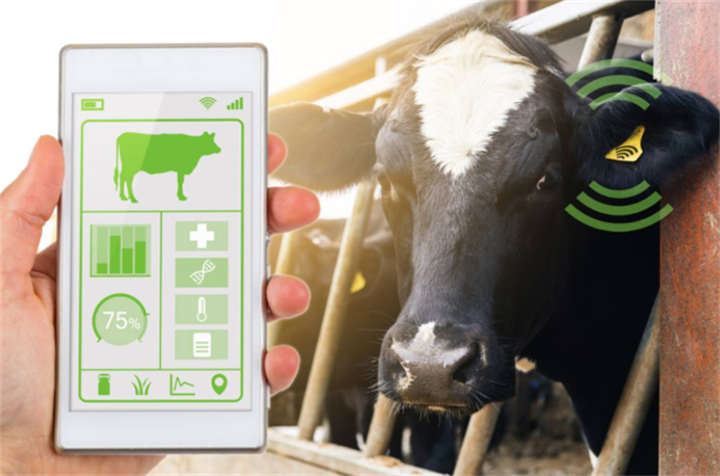
In recent years, precision livestock farming has attracted significant R&D investment and media attention.
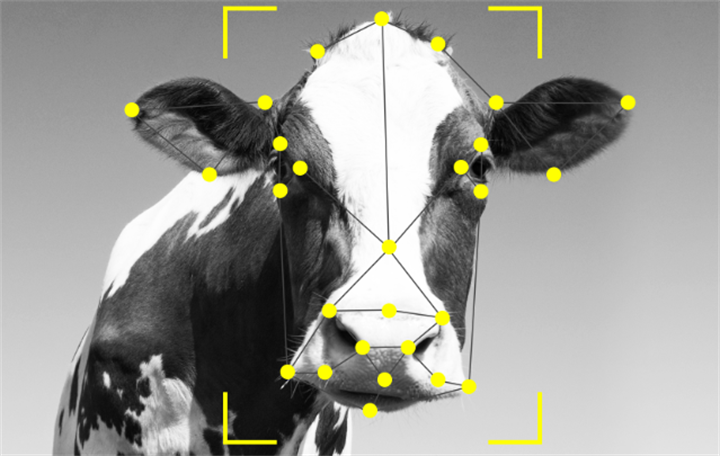
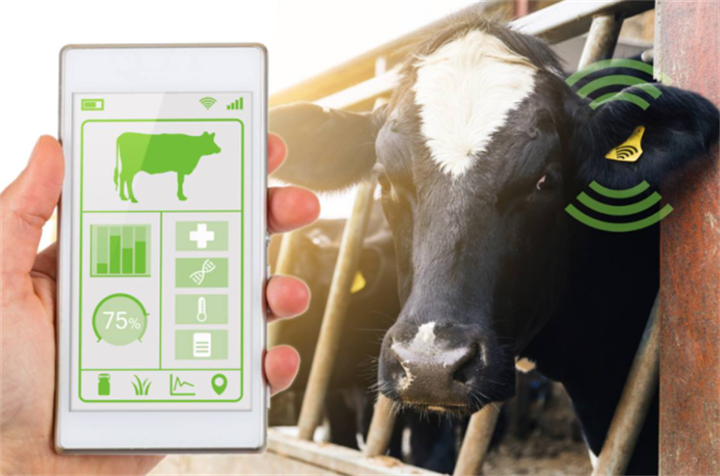
One particularly promising combination of technologies—computer-vision-based cattle facial recognition paired with precision feeding systems—has raised expectations. The core logic is straightforward: identify each animal with a camera, then deliver a customised diet based on its weight, body condition, and growth stage.
In theory, this achieves two goals simultaneously. It lowers feed costs, and it reduces methane, a potent greenhouse gas, by preventing excess feed from fermenting inside the animal’s stomach.
Several controlled trials have demonstrated high identification accuracy and the ability to link individual identity to feeding behaviour. Yet mainstream commercial adoption remains far below expectations worldwide. Analysis suggests the bottleneck is not recognition accuracy itself, but a set of intertwined economic, institutional, and trust-related barriers. This article examines those deeper reasons and explores the gap between the ideal of “lower emissions, higher output” and on-the-ground reality.
1. Technical Hurdles: Variable Environments and Fragmented Data
Transferring the success of human facial recognition to cattle is far from a straightforward copy-paste exercise.
A 2024 systematic review published in the journal Information Processing in Agriculture notes that the highly uncontrolled farm environment—dramatic lighting changes, rain, fog, and mud—poses the primary challenge to recognition reliability. According to the review’s comparison of different AI models, accuracy in specific test conditions can range from 84% to nearly 99.8%.
Critically, however, this performance often drops sharply when a model is deployed in a new farm setting or applied to a different breed. The reason is that facial recognition relies on texture and contour details, and breeds such as Angus, with their solid black coats, offer very low facial contrast. Age and accumulated dirt make the task even harder.
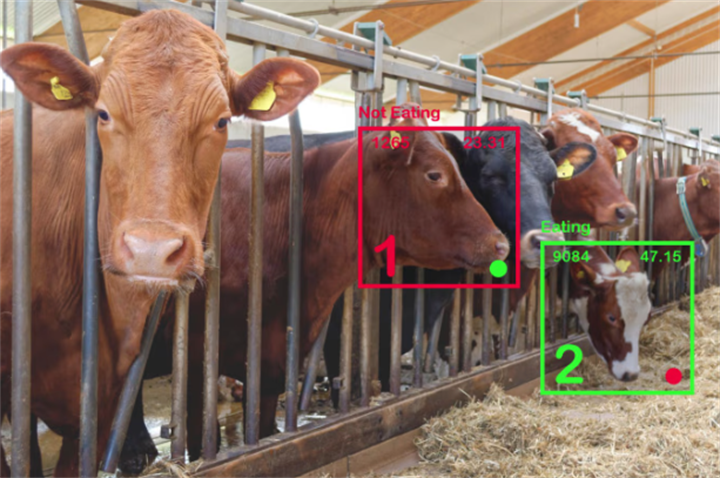
Identifying “Cow A” is just the first step. The real value lies in precisely linking that identity to real-time behaviours such as feed intake and chewing speed. This requires local computing equipment at the feed bunk capable of processing video streams on the spot, what the industry calls edge computing.
Several commercial systems are moving in this direction. For example, CattleEye uses AI-powered video analytics to monitor cow movement, aiming to detect lameness early. myANIML combines facial recognition, behaviour tracking, and machine learning to issue alerts for health problems such as mastitis. These examples show that facial recognition is evolving from simple identification into more complex behaviour and health monitoring. However, achieving reliable cross-farm behaviour linking remains an ongoing technical challenge.
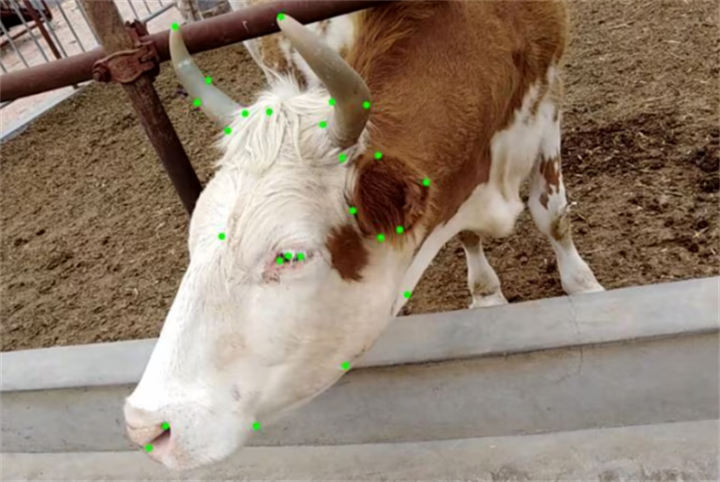
Another frequently overlooked obstacle lies in the data foundation itself. Before a system can work, a facial profile usually needs to be built for each animal. Some solutions, such as 406 Bovine, rely on a short smartphone video to create that profile; the reported same-day matching accuracy can reach 94%.
This means that database creation, maintenance, and ownership form a prerequisite for technology adoption. In practice, these databases are often controlled by different vendors and remain isolated from one another. Such data fragmentation not only limits the continuous improvement of algorithms, it also makes it extremely difficult to compare emission baselines across farms and regions—and establishing a baseline is the very first step in quantifying any environmental value.
2. The Carbon Accounting Trap: You Can Save Emissions, but You Cannot Count or Sell Them
According to multiple research simulations, the methane-reduction logic of precision feeding holds up: by avoiding the fermentation of excess nutrients in the stomach, methane generation is suppressed at the source. This is complementary to end-of-pipe solutions such as feeding seaweed additives. However, for an environmental benefit to translate into financial return, it must pass through a “quantify—verify—trade” funnel.
The biggest bottleneck sits exactly at the funnel’s entrance. To have emission reductions recognised and traded, a set of agreed calculation and verification rules—a “methodology”—is needed.
Under major international voluntary carbon market mechanisms, such as Verra’s Verified Carbon Standard (VCS) or the Gold Standard, methodologies for projects that reduce methane through improved feeding management are still undergoing a difficult refinement process. Multiple industry reports indicate that very few such projects have successfully registered and issued carbon credits. Without a methodology accepted by carbon markets, the methane savings achieved through precision feeding cannot yet be certified as tradable carbon credits. Their emission-reduction value is, in financial terms, practically zero.
A regional initiative illustrates this disconnect. In Haiyuan County, China, a county-level smart beef cattle big-data platform has reportedly used facial recognition to create digital files for more than 50,000 cattle, visualising data from breeding to slaughter and using that information for insurance and loan services. Yet public information shows that the emission-reduction data generated by the platform is currently not linked to any carbon trading system. This case suggests that even when large-scale digital archiving is achieved with local policy support, a huge institutional gap remains between “getting data into the cloud” and “turning carbon savings into cash.”
This creates a commercial paradox. Precision feeding already delivers a direct, visible benefit: saved feed translates directly to saved money. This, somewhat perversely, reduces a farm’s willingness to pay extra for the expensive system that makes those savings possible. If the system cost is bundled with future carbon credits that cannot yet be monetised, and farms are asked to cede a share of these uncertain future rights, the business case becomes very difficult to justify under current logic.
3. Behavioural Resistance: Thin Margins and a Trust Deficit
Even if the institutional barriers to carbon accounting were removed, another layer of resistance comes from the economic reality and psychology of farmers.
The return on investment for precision livestock technologies varies significantly between livestock types. On a dairy farm, a lactating cow generates high annual value and stays in the herd for years. Any early health intervention that prevents mastitis or lameness directly avoids milk-production losses, delivering an immediate payback.
In contrast, beef cattle are typically finished in just a few months. The improvement in daily weight gain and feed savings from precision feeding, spread across each animal, delivers a relatively modest absolute profit. When live cattle prices enter a cyclical downturn, any technology expense structured as a subscription service fee is likely to be seen as a non-essential fixed cost that should be cut first.
An academic review proposed a multi-dimensional framework to assess farmers’ readiness to adopt such technology, covering aspects like technology awareness, specific need identification, expected benefits, and main concerns. The researchers found that many farmers are unsure what specific pain points facial recognition can solve on their operation, and they worry that it will disrupt the intuitive, experience-based management they have long relied on.
On many farms, experienced managers use visual observation to judge body condition and feed requirements. When an AI system issues a recommendation that contradicts that intuition—for instance, “reduce feed for this cow by 200 grams today”—while the manager’s instinct says the animal needs extra nutrition, a conflict arises. In a farm management culture where decision-making accountability is highly personal, algorithmic advice that cannot be understood intuitively struggles to gain trust.
Alongside this sits a deeper anxiety about over-surveillance. Continuous, all-around data collection may leave some farmers feeling that their management authority is being silently eroded. There is also the fear that this valuable production data could be exploited by upstream feed suppliers or downstream slaughterhouses, putting the farmer at a disadvantage in future business negotiations.
4. Policy Divergence: Push and Pull Are Unevenly Distributed Globally
The strength of the incentive to adopt this technology is distributed very unevenly around the world, and this almost perfectly correlates with the coercive power of policy.
Within the European Union, the “Farm to Fork” strategy and increasingly concrete methane-reduction regulations are gradually turning agricultural greenhouse gas emissions into a direct production cost. Another notable trend is that facial recognition is being pulled into the orbit of trade compliance.
It has been reported that an application called CattleTracs is collaborating with the European Commission to deploy its system in Brazil, helping beef producers prove that their cattle were not raised on deforested land, a new EU requirement for beef imports. The app adds GPS coordinates and a timestamp to each photo of a cow’s face, providing a digital proof of origin. This case shows that powerful regulatory demands can rapidly create a genuine need for facial recognition systems, even when the initial motivation is not carbon reduction.
By contrast, in regions without mandatory carbon pricing or agricultural emission-reduction directives, adoption is driven almost entirely by voluntary sustainability pledges and modest cost savings. A discernible pattern emerges: without the strong cooperation of a policy “stick,” the market “carrot” alone provides insufficient motivation for most producers to take the risk of overhauling established management routines.
Conclusion: The Hand That Opens the Barn Door May Belong to Institutions, Not Algorithms
Taken together, the adoption problem for precision feeding with cattle facial recognition is, at its core, a systemic deadlock over how the future value of emission reductions should be distributed in advance.
Algorithms can, to a reasonable extent, calculate how much feed has been saved and how much methane may have been reduced. But the broader value chain has yet to establish a mechanism to fairly and transparently quantify, certify, and channel that potential carbon value to the farmers who shoulder the data costs and production risks.
Breaking the deadlock will likely require progress on three fronts to happen in tandem. At the level of basic science, low-cost, highly automated, and regulator-accepted technologies for on-farm methane verification will be needed to replace expensive and lagged model estimations.
On the institutional supply side, carbon market authorities and methodology developers will need to jointly deliver more streamlined, practical accounting methods for improved agricultural management.
At the business model level, a shift may be required, from “selling software to farms” toward “partnering with farms as carbon asset co-operators,” where the technology provider bears most of the upfront investment and shares in the revenue from future carbon credit sales.
These conditions are currently far from mature, so widespread adoption of the technology is still some time away. The hand that ultimately pushes open the barn door may belong not to an AI scientist achieving the next algorithmic breakthrough, but to policymakers and financial innovators who manage to build, for every identified and quantified bovine face, a “carbon bank account” that the market can read and recognise.
References
[1] Mahato, S., & Neethirajan, S. (2024). Integrating Artificial Intelligence in dairy farm management facial recognition for cows. Information Processing in Agriculture. https://doi.org/10.1016/j.inpa.2024.10.001
[2] [2]Krymowski, J. (2025, October). Could facial recognition technology manage the dairy cow of the future? ].
[3]Ningxia Daily. (2024, August 7). Cattle data goes visual: Nation’s first county-level ‘cattle facial recognition’ smart cloud platform lands in Haiyuan.
[4]World Bank. (2024). State and Trends of Carbon Pricing 2024. Washington, D.C.: World Bank Group.
About the Author
Daniel Brooks covers the intersection of technology, business, and industrial transformation. His reporting focuses on robotics, advanced manufacturing, cloud computing, and emerging technology markets. He aims to provide clear, evidence-based analysis of how technological innovation is reshaping industries worldwide.
Editorial Note
This article draws on a cross-section of academic research, industry reporting, and on-the-ground accounts to diagnose why a technologically plausible solution—precision feeding guided by cattle facial recognition—has failed to scale. The evidence consistently points beyond the lab: the missing piece is not better algorithms, but a functional bridge between verified emission reductions and farm-level financial incentives. For readers tracking the intersection of climate tech and agriculture, the story of the unrecognised bovine face is a case study in how institutional infrastructure often lags behind innovation. It suggests that the next chapter will be written not in code, but in carbon accounting standards and the business models that bring them to life.
Recommend:

Going Unmanned Isn’t About Removing Pilots—It’s About Rebuilding Flight Capability: AI and 5G-A Transform Low-Altitude Aviation

Huawei’s “Tao Law” Could Reshape How Future Chips Are Designed

The Battle for On-Device AI Chips: Qualcomm, Apple, and MediaTek – Who Will Dominate?
Why Precision Feeding with Cattle Facial Recognition Is Stalling