May 27, 2026, 8:41 a.m. ET | ⏱️11–13 minutes
By Ethan Carter
The tech industry loves a good numbers war. In late 2026, the battle is centered on trillions of operations per second (TOPS), benchmark scores, and power-efficiency curves.
The three flagship mobile platforms from Qualcomm, MediaTek, and Apple are now all competing head-to-head. Phones powered by the Snapdragon 8 Elite Gen 5 launched in September 2026, Apple’s iPhone 17 series with the A19 Pro arrived around the same period, and devices using MediaTek’s Dimensity 9500 are expected in October.
But the real story is not simply “who has the highest score.” The larger shift is that on-device AI is evolving from a premium feature into a new computing baseline.
According to Counterpoint Research, more than 30% of smartphone chips shipped globally in 2025 supported generative AI. By the third quarter of 2025, cumulative shipments of generative-AI-ready smartphones had already exceeded 500 million units, less than two years after the first commercial devices appeared. Industry forecasts suggest that figure could surpass 1 billion units by the third quarter of 2026.
At the same time, so-called “Agentic AI” systems — AI that can understand context, plan tasks, and complete multi-step operations autonomously — are growing rapidly. Counterpoint estimates that agentic-AI-capable chips represented only about 4% of the market by the end of 2025, but could rise to roughly 32% by 2027.
Peter Richardson, a research vice president at Counterpoint, has also argued that by 2027 more than 80% of premium smartphones may include some form of agentic AI capability. The larger opportunity, however, may come from bringing these features into mid-range devices.
The likely outcome is not a single winner. Instead, the market increasingly appears to be dividing into three parallel leadership models.
Apple: Ecosystem Integration as a Defensive Moat
Apple is often compared directly with Qualcomm and the Android ecosystem, but the comparison can be misleading in the context of on-device AI.
According to Counterpoint Research, Apple had not yet released a phone specifically marketed around “agentic AI” by the end of 2025. Nevertheless, its vertically integrated approach — including custom silicon, a dedicated neural engine, unified memory architecture, and tight hardware-software integration — remains widely viewed as a structural advantage.
The A19 Pro reportedly continues Apple’s custom CPU strategy with two high-performance cores. Media reports suggest the neural engine could deliver up to four times the peak AI performance of the A18 Pro generation.
The 16-core neural engine is designed with hardware acceleration for transformer models, helping large matrix operations run more efficiently while lowering inference power consumption.
Yet Apple’s most significant investment may not be peak TOPS at all.
Instead, it may be “Private Cloud Compute,” Apple’s architecture designed to ensure that privacy and security protections remain consistent whether AI workloads run locally on the device or remotely in the cloud.
At the center of Apple Intelligence is the Apple Foundation Model (AFM). Reports suggest the iPhone 17 lineup can run large language models with several billion parameters directly on the device. Tasks that require more compute can seamlessly shift to cloud processing without exposing sensitive user data.
For most users, that transition may remain effectively invisible.
Another important shift is emerging inside Apple’s developer ecosystem.
In March 2026, Ollama announced that it would migrate its Mac inference engine from the widely used llama.cpp framework to Apple’s MLX framework. The move generated significant discussion among developers because it suggests Apple hardware is increasingly becoming a self-contained AI workstation rather than merely a terminal connected to cloud services.
Independent tests indicate MLX can significantly outperform older approaches. On Apple’s M4 Max chip, MLX reportedly achieved around 60–70 tokens per second, compared with roughly 35 tokens per second using more traditional inference frameworks. In some prefill workloads, performance gains reportedly reached as high as five times faster.
Qualcomm: The Coordinator of the Open Android Ecosystem
If Apple’s strategy resembles a tightly controlled ecosystem, Qualcomm’s approach is built around openness and scale.
The Snapdragon 8 Elite Gen 5 reportedly uses a 2+6 all-big-core design, with two Oryon v2 ultra-performance cores running at 4.6GHz and six additional big cores operating at 3.62GHz.
Its Hexagon NPU has reportedly crossed the 100 TOPS threshold, while on-device personal-AI compute performance is said to have improved by roughly 39%.
The NPU architecture includes 12 scalar accelerators, eight vector accelerators, and one tensor accelerator, all designed to support advanced on-device AI assistants.
Qualcomm’s broader strategy centers on personalized AI systems that operate directly on the device. The company has focused heavily on enabling agentic assistants capable of proactive and context-aware behavior.
Counterpoint Research notes that Qualcomm has rapidly expanded its position in the agentic-AI smartphone market through partnerships with Samsung and other Android manufacturers.
Its strengths extend beyond hardware alone. Qualcomm also benefits from a mature AI software stack, long-standing developer relationships, and broad ecosystem compatibility across Android devices.
In the important US$300–499 smartphone segment — an area Counterpoint identifies as a major source of GenAI phone growth — Qualcomm maintains a particularly strong position.
However, openness also creates challenges.
Unlike Apple’s tightly unified software environment, Qualcomm must support a fragmented ecosystem that includes Google’s LiteRT, Meta’s LLaMA.cpp ecosystem, and many proprietary frameworks from device manufacturers.
Each framework update can create substantial software integration work.
Counterpoint also observed that MediaTek was first to commercialize agentic AI features through the Dimensity 9400 series, with Qualcomm following shortly afterward. This reflects a broader industry transition: smartphone AI competition is moving beyond simple voice assistants toward systems capable of autonomous decision-making and contextual reasoning.
MediaTek: Expanding from Chipmaker to Engineering Platform
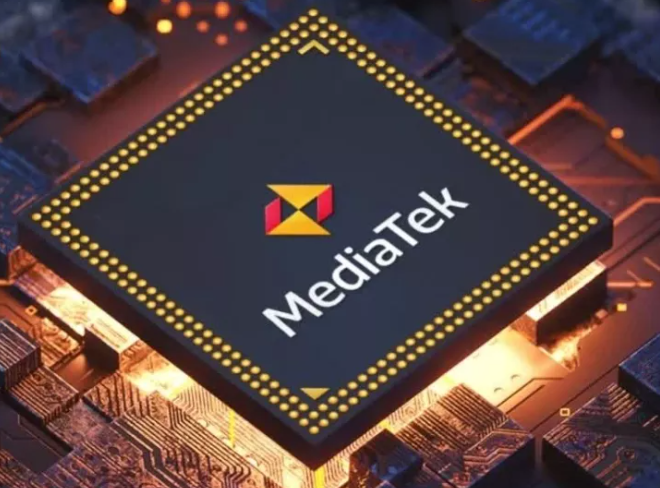
MediaTek often receives less public attention than Apple or Qualcomm, but it remains one of the most influential players in the smartphone market.
Counterpoint data for the third quarter of 2025 showed MediaTek holding roughly 34% of the global smartphone SoC market, giving it the largest overall shipment share.
Although its position in premium GenAI chips differs from its broader market share, MediaTek’s AI ecosystem has expanded rapidly in recent years.
Over the past three years, the company’s AI ecosystem partners reportedly increased by 240%, while downloads of its AI development kit rose by 440%.
At the same time, daily agentic-AI task volumes reportedly grew from 120 million in 2025 to 870 million in 2026 — more than a sevenfold increase.
At the MediaTek Dimensity Developer Conference (MDDC 2026), the company introduced several tools intended to reduce the barriers to on-device AI deployment.
The Dimensity AI Developer Kit 3.0 includes four major components:
· LVM visual deployment — replacing command-line deployment with GUI-based modules, reportedly improving efficiency by 50%.
· Low-bit compression toolkit — enabling model compression improvements of up to 58% without major quality loss.
· eNPU toolkit — reducing power consumption for always-on lightweight AI models by roughly 42%.
· Dimensity AI Partner — automating model conversion and migration workflows, reportedly reducing deployment time by up to 90%.
MediaTek also introduced the Dimensity AI Agentic Engine 2.0, built around its SensingClaw technology for low-power, always-active sensing.
The system is intended to help manufacturers create “Agent OS” environments capable of cross-application task execution and continuous contextual awareness.
Demonstrations at MDDC 2026 included collaborations with OPPO, Xiaomi, and Transsion.
Gaming has also become a key testing ground for on-device AI scheduling and optimization.
At the conference, MediaTek showcased several gaming-focused technologies:
· A mobile Ray Tracing Pipeline (RTP) developed with Tencent’s Delta Force project for cross-device rendering between PC and mobile.
· Virtual geometry technology integrated with Unity’s Tuanjie Engine, reportedly capable of rendering more than 1 billion triangles on mobile devices while sustaining 1.5K resolution frame rates for one hour.
· Low-latency Bluetooth audio technology with latency as low as 32ms, already tested in Peacekeeper Elite environments.
These developments suggest that the next challenge in on-device AI is not simply demonstrating isolated AI features, but converting those features into stable, scalable consumer products.
Viewed from that perspective, MediaTek may increasingly be evolving from a chip supplier into a broader engineering platform that coordinates device makers, software developers, engines, and content ecosystems.
The Deeper Variables Behind the Competition
Several structural factors may ultimately shape the outcome of the on-device AI race.
1. Architectural Control
Industry analysts frequently point out that Apple and Huawei design nearly all major SoC modules internally while still relying on the Arm instruction set architecture.
Qualcomm has also expanded its custom design efforts across CPU, GPU, and NPU components.
MediaTek, by contrast, uses a more hybrid approach that combines custom elements with Arm reference designs.
Custom architecture does not automatically guarantee better user experience, but it can provide deeper control over cache design, memory hierarchy, power efficiency, and data flow.
2. Foundry Access
Manufacturing access may become another decisive variable.
TSMC’s third-generation 3nm process (N3P) is currently used across the flagship platforms from Apple, Qualcomm, and MediaTek.
However, analyst reports indicate Apple has already secured a significant portion of TSMC’s initial 2nm production capacity, likely for future iPhone generations beginning around 2027.
3. Real-World AI Performance
Perhaps most importantly, the industry is gradually shifting away from headline TOPS numbers alone.
Research firms including Counterpoint increasingly emphasize metrics such as memory bandwidth, sustained AI throughput, cache hierarchy efficiency, and thermal stability during long workloads.
In that sense, traditional “TOPS wars” may become less meaningful over time.
Counterpoint also argues that Apple’s combination of custom silicon, neural engines, unified memory, and ecosystem integration remains a significant strategic advantage — especially if the company accelerates its investment in local AI processing.
Conclusion: Three Leadership Models Instead of One Winner
The on-device AI chip race is approaching a major transition point.
AI inference is rapidly shifting from a premium differentiator into a baseline expectation for modern smartphones.
By the end of 2027, the market may realistically settle into three parallel leadership positions rather than a single dominant winner:
· Experience leader — likely Apple, particularly in tightly integrated and privacy-focused premium experiences.
· Ecosystem leader — likely Qualcomm, benefiting from the largest third-party Android developer ecosystem and broad high-performance deployment.
· Volume and efficiency leader — likely MediaTek, leveraging scale advantages to bring on-device AI to a wider global user base.
Counterpoint Research also notes that much of the growth for agentic AI is expected to come from devices priced above US$600 as well as the US$250–600 mid-to-high range.
MediaTek has already introduced agentic-AI-ready Dimensity 8400, 8450, and 8500 series chips, potentially giving it an advantage in expanding advanced AI experiences beyond flagship devices.
Meanwhile, Qualcomm’s close partnerships with Samsung and other Android manufacturers, combined with its mature AI software ecosystem, continue to accelerate deployment across premium Android phones.
The future of mobile AI competition therefore appears increasingly multidimensional.
It is no longer only a contest over benchmark numbers.
It is a broader battle involving software ecosystems, developer adoption, privacy architectures, manufacturing capacity, and real-world AI usability.
The race to make AI truly ubiquitous has only just begun.
Editor’s Preface
The rapid rise of on-device AI marks one of the most significant transitions in the smartphone industry since the adoption of mobile internet and cloud computing. Unlike earlier AI systems that depended heavily on remote servers, the current generation of mobile chips increasingly enables AI workloads to run directly on consumer devices.
This article examines the evolving competition among Apple, Qualcomm, and MediaTek through the lens of ecosystem strategy, chip architecture, software integration, and deployment scale. Because many products discussed are newly released or based partly on industry reporting and analyst projections, some specifications and performance claims may evolve over time as independent testing becomes available.
Rather than focusing solely on benchmark numbers, the article aims to explore the broader structural shift shaping the next phase of mobile computing.
About the Author
Ethan Carter focuses on AI chips, semiconductor technology, and computing infrastructure. His work covers GPUs, AI accelerators, edge AI processors, and the hardware systems that power modern artificial intelligence. He writes analytical articles that connect technical developments with industry trends and practical applications.
References
1. Counterpoint Research — Generative AI Smartphone Market Reports (2025–2026)
2. TSMC Investor and Process Technology Briefings (N3P and 2nm roadmap discussions)
3. MediaTek Dimensity Developer Conference (MDDC 2026) presentations and technical announcements
4. Apple Intelligence and Private Cloud Compute technical overview materials
5. Ollama and Apple MLX developer framework discussions and performance benchmarking reports
Recommend:

The "Second Battlefield" of AI Chips: Why Edge Computing Has Become a Must-Win for Tech Giants
Autonomous Driving Chips’ Next Chapter: No Longer Just About TOPS, Now It’s About Efficiency
Tesla Optimus Goes to the Factory: The Best Use Case for Humanoid Robots – and Its Limits

Which of Space, Brain-Computer, or Genetics Might Blend into Daily Life First?