
May 30, 2026, 10:25 a.m. ET | ⏱️11–13 minutes
By Daniel Brooks
Discussions around the capabilities of Tesla's Full Self-Driving system often swing between two extremes. On one side, believers argue that with enough data and computing power, a vision-only neural network can eventually solve every challenge in autonomous driving. On the other, skeptics insist that the physical limits of cameras represent an insurmountable barrier.
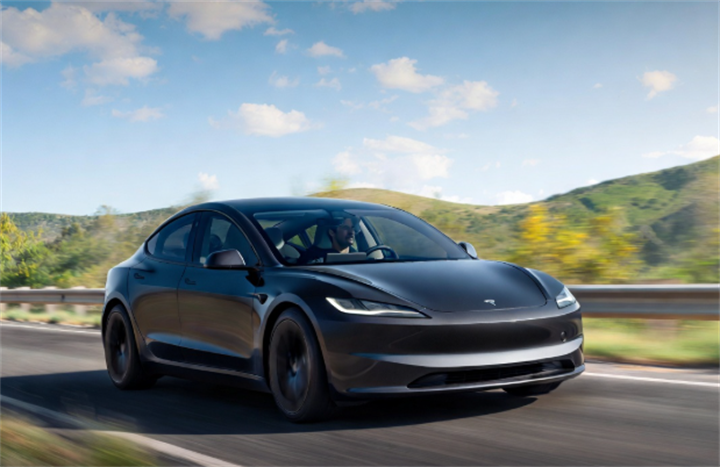
In late 2025, a Tesla Model 3 running FSD V14, driven by an ordinary owner, completed a zero-intervention trip across the continental United States—2,732 miles, lasting nearly three days, with no human takeover. Jim Fan, head of robotics at Nvidia, described the feat as passing a "physical Turing test," meaning it had become hard to tell whether a human or a machine was driving.
Yet this milestone also left behind a deeper question: in the pursuit of end-to-end, all-scenario zero-intervention driving, has the generalization capability of the vision-only approach reached some kind of invisible ceiling? This article does not aim to give a yes-or-no answer. Instead, it tries to fold the evidence and industry analysis from this event into a structured framework, unpacking the multiple meanings of that "ceiling."
1. The Boundaries of Physical Perception
To understand the constraints of a vision-only system, it helps to start with a basic principle: a camera is essentially a passive photon counter. Unlike lidar, which actively sends out light beams to detect objects, a camera relies on receiving ambient light to form an image. When the light is too dim, or when intense glare washes everything out in white, the meaningful signal the sensor receives is severely degraded, and the outlines of objects can drown in noise. This is dictated by physics and cannot be fully eliminated by software.
In the V13 version, Tesla introduced a technique sometimes called "photon-to-control," which attempts to bypass certain compression steps in traditional image processing and extract more faint information from the raw sensor data. From an engineering standpoint, this is an efficiency gain—it is like making better use of the ingredients already available.
The cross-country journey spanned multiple climate zones and experienced the alternation of day and night. The zero-intervention result demonstrates that a vision-based system can handle the vast majority of real-world lighting conditions. However, industry observers and some technical analyses cautiously point out that such long-distance demonstrations tend to avoid the most optically hostile scenarios, such as full-screen glare from a setting sun directly hitting the lens, or dark obstacles suddenly appearing on unlit roads at night. Under these extreme conditions, the loss of input signal may exceed what any software can compensate for. The success of the cross-country trip proves that vision algorithms are remarkably robust across a broad range of illumination. But it does not yet provide sufficient evidence that the system has crossed the boundary of physical perception under all conditions.
2. The Fog of Cognitive Reasoning
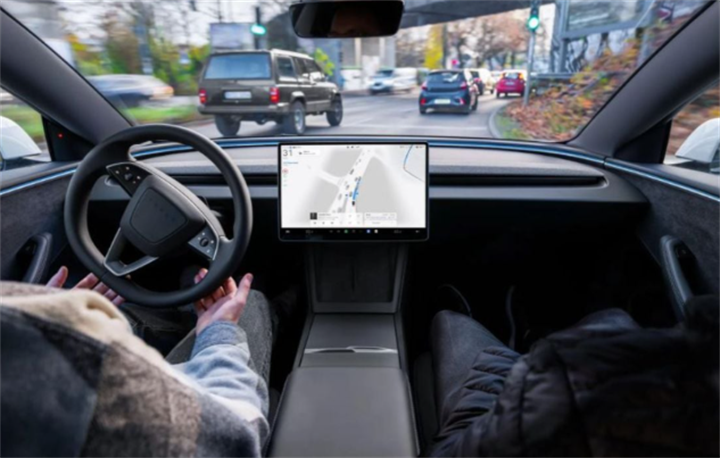
The most striking part of the cross-country case was how FSD V14 exhibited a seasoned, human-like driving style. The vehicle would nudge forward tentatively at an intersection, observe the situation, and then accelerate smoothly. It could anticipate the intentions of a hesitant car ahead. These subtle maneuvers are extremely difficult to write down as rules; they are learned from experience, much like a human driver.
The key question, however, is whether this behavioral imitation reflects genuine understanding or just a higher-order form of pattern matching. When a human driver sees a plastic bag, a cardboard box, or an elderly person with a stroller at the curb, they instinctively draw on life experience and social common sense to assess risk. A plastic bag can be driven over, but a box might conceal something. The elderly person might simply be standing there, or might step into the road at any moment. This kind of rapid judgment based on causal reasoning is a general challenge for contemporary artificial intelligence.
An end-to-end model, trained on vast amounts of driving video, can statistically simulate cautious behavior. But if a particular combination of scenarios was never sufficiently represented in its training data, the system may show uncertainty in its decisions. Public information suggests Tesla is attempting to integrate the capabilities of its Grok large language model into FSD. This could potentially help the system interpret fuzzier commands and offer human-readable explanations for its driving decisions.
At the same time, Tesla's technical team has outlined a concept called a "neural world simulator," where the model learns not just to mimic actions, but to understand what consequences a given action will push the world toward. These efforts indicate a deliberate push from reactive driving towards something closer to deliberative driving. Still, industry research widely believes that enabling a machine to truly grasp causal reasoning and make safe judgments in novel, complex emergencies is far more difficult than current visual pattern recognition. This may constitute a more fundamental cognitive bottleneck than the physical ceiling.
3. From a Single Feat to Mass Deployment
The zero-intervention cross-country drive vividly illustrated the power of Tesla's "data flywheel." Millions of Tesla vehicles on the road continuously send back data from instances where a human driver had to take over. The system learns from these cases and iteratively improves. The seamless 2,732-mile journey also served as an engineering validation of the system's stability over an extended operating period.
However, industry analysis reminds us that treating a single success as adequate proof of reliability carries statistical risk. The safety threshold for autonomous driving is measured in terms of "how many miles per accident." A single medium-to-long-distance trip with zero interventions, however symbolically powerful, is far too small a sample to conclude that the system has reached human-level safety.
Another noteworthy detail is that the owner who completed the trip was a heavy user who had already accumulated over 10,000 miles with FSD. He was familiar with the scenarios that might make the system hesitate and knew when to be ready to take over. This state of human-machine co-adaptation is entirely different from that of an average consumer who has just been introduced to the system and may place too much trust in it. Whether the system's lower bound of safety is robust enough when facing the general public, who may not understand its limitations, remains an open question.
Furthermore, the U.S. interstate highways featured in the trip have clear lane markings and strict traffic discipline; they are among the most autonomous-driving-friendly environments in the world. In city streets with more complex interactions and less structured layouts, the system's generalization capability could face another level of challenge. Tesla continues to label FSD as "Supervised," a legal designation that itself indicates a gap still exists between the upper limit of its technical capability and the lower limit of a commercially and socially accepted deployment.
4. The Strategic Choice of Vision-Only
The debate between the vision-only approach and multi-sensor fusion is often framed as a simple binary of technical superiority. But from an industry dynamics perspective, the choice involves more complex logic.
Over the past few years, the global supply landscape for lidar has shifted dramatically. Industry reports indicate that the unit price of mainstream products has dropped from tens of thousands of dollars to the few-hundred-dollar range, making its share of overall vehicle cost quite modest. From a pure performance redundancy standpoint, adding lidar or high-precision 4D radar could provide an orthogonal physical measurement cue to vision. This means that if a camera fails for some reason, another sensor based on a different physical principle can act as a "second opinion." This helps not only in preventing accidents but also in providing clear evidence for post-incident analysis.
Why then does Tesla persist with a vision-only path? Some analysts and industry observers offer interpretations that go beyond purely technical considerations. First, the vast amount of vision-only data accumulated over many years and the algorithm architecture optimized around this paradigm create significant research and development inertia. Second, the long-built technical narrative of "vision first," repeatedly communicated to the market and the public, is now deeply embedded in brand perception. Third, a view exists that the choice may also involve considerations of strategic autonomy within the supply chain. From this angle, the "ceiling" on the generalization capability of the vision-only approach may be defined not just by the laws of physics or artificial intelligence theory, but also by the softer boundaries of the industrial ecosystem and business strategy.
Conclusion: A Ceiling Defined by Composite Coordinates
Let us return to the original question: has the vision-only path represented by Tesla FSD reached its limit in generalization capability?
The cross-country feat powerfully demonstrates that this path still has considerable room to grow in handling routine driving scenarios and simulating a smooth human driving feel. It is far from hitting a plateau in that regard.
However, if the definition of the "ceiling" is a system that can, like the most experienced and forever vigilant human driver, perform common-sense reasoning in an infinitely complex physical world and take full responsibility for every decision, then current progress also clearly shows a composite barrier ahead. This barrier is formed by residual physical uncertainty, the profound challenges of cognitive reasoning, the statistical dilemmas of long-tail data, and the inertia of industrial strategy. The endpoint of this race may not be the sole victory of one sensor configuration, but a continued convergence towards a more inclusive, explainable, and highly reliable intelligent system architecture.
References
[1] Tesla AI Team. (2025, December). FSD V14 and the path to unsupervised autonomy. Tesla Official Blog.
[2] Fan, J. [@DrJimFan]. (2025, December 28). FSD V14 has passed the physical Turing test [Post]. X.
[3] Elluswamy, A. (2023). World models for autonomous driving. Presentation at CVPR 2023 Workshop on End-to-End Autonomous Driving, Vancouver.
[4] Yole Intelligence. (2025). Lidar for automotive and industrial applications – market and technology report 2025.
[5] Tesla, Inc. (2026, January). Q4 and full year 2025 financial results and update. Shareholder Letter.
About the Author
Daniel Brooks covers the intersection of technology, business, and industrial transformation. His reporting focuses on robotics, advanced manufacturing, cloud computing, and emerging technology markets. He aims to provide clear, evidence-based analysis of how technological innovation is reshaping industries worldwide.
Editor's Note: This analysis draws from publicly available data, industry reports, and statements by corporate executives and researchers as of May 2026. It aims to explore the multifaceted debate surrounding the limits of vision-only autonomous driving rather than to offer definitive conclusions. The perspectives presented are intended to inform readers and stimulate thoughtful discussion; they do not constitute investment or technology adoption advice.
Recommend:
How Huawei's Pangu-Weather AI Model Goes Beyond "Physical Laws" and Reshapes the Future of Global Weather Forecasting
China's Race for the First Publicly Listed Humanoid Robot Company: Which Robots Will Reach Factories and Homes First?
Going Unmanned Isn’t About Removing Pilots—It’s About Rebuilding Flight Capability: AI and 5G-A Transform Low-Altitude Aviation
The Composite Ceiling of Vision-Only: The Unsolved Challenges Behind Tesla FSD's Zero-Intervention Feat