

May 27, 2026, 7:45 a.m. ET | ⏱️13–14 minutes
By Ethan Carter
In 2026, a phrase is being quoted again and again: "An AI without spatial intelligence is incomplete."
This idea, put forward by Stanford professor Fei-Fei Li, captures a deep shift now underway.
Over the last ten years, most AI breakthroughs have focused on generating language, images, and video. These models essentially "compress the world." They learn statistical patterns from massive amounts of data and then recombine them into plausible content.
Now, a new force is emerging. It tries to make AI "simulate evolution" – to understand gravity, inertia, friction, and even cause and effect in three-dimensional space.
A helpful analogy. A large language model is like a genius who has read every LEGO instruction book but has never touched a single brick. It can describe structures and write steps. But it cannot predict that a tower might fall because the center of gravity is unstable.
The new generation of "physical AI" is like a child holding those bricks for the first time. It instantly grasps the physics that the instructions never mention. This shift is far more important than a simple performance boost.
This wave is different from video models like Sora. Older tools excel at creating pixel-level visual realism. But they often lack "state persistence." They can generate a video of a vase shattering. But they cannot maintain a world where the broken vase stays broken – something you need for self-driving simulations or interactive games.
Moving from "visual realism" to "physical realism" is a leap from superficial illusion to true cause and effect. It is redefining AI's relationship with the physical world.
These three industries are not separate stories. They are the first testing grounds for physical AI. Think of a self-driving car as a "mobile robot," a building as a "stationary robot," and a game world as a "fantasy robot." They all share the same core need: giving machines a common-sense understanding of physics.
Some research firms are very optimistic. Investment firm Coatue Management estimated in 2025 that the long-term market for physical AI could reach $6 trillion – about 50% larger than digital AI. Counterpoint Research predicts that between 2025 and 2035, physical AI devices including drones, robots, and self-driving cars will reach total shipments of 145 million units. These numbers have uncertainties, but the trend is clear.
Self-Driving: Dismantling the 'Driving School' to Build a 'Lab of Thought'
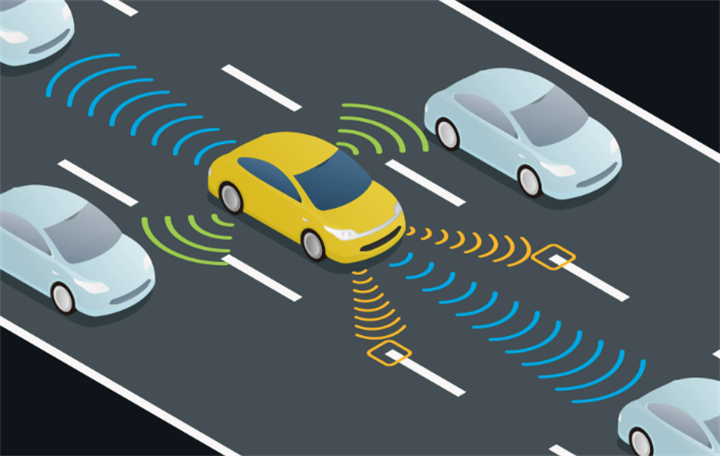
In autonomous driving, physical AI is changing the technical architecture.
A few years ago, the industry shifted from rule-based modules to end-to-end models. This allowed cars to react intuitively like an experienced driver. But these models were "mute drivers." They could avoid obstacles but couldn't explain their decisions.
Now, world models are changing this. They let a system quickly imagine several possible futures – like a mental rehearsal – before choosing the best path.
In early 2026, NVIDIA CEO Jensen Huang declared that "the ChatGPT moment for autonomous driving has arrived."
This statement has clear business intent. NVIDIA is trying to build an ecosystem through platforms like Omniverse and Drive Sim – one where the more you rely on accurate simulation, the more you need high-performance chips. This could challenge traditional Tier 1 suppliers like Bosch and Continental even more than carmakers developing their own software.
There is an interesting split in technical approaches. One side promotes Vision-Language-Action models (VLAs), which let cars have semantic conversations with humans. The other side bets on world models, which purely simulate physical laws.
This is not just an academic debate – it's a tension between "human interaction" and "pure machine logic." Some now suggest a hybrid: world models as the foundation for handling extreme physical scenarios, with VLAs on top for natural interaction. If this works, future driving systems might have a "sensory layer" and a "physics layer."
For European readers, the UK company Wayve is worth watching. Its GAIA-3 world model has 15 billion parameters. It is not just used for scene simulation – it tries to directly evaluate driving safety. Wayve claims it cut by five times the number of simulations that look good but don't match real-world testing.
This suggests a possible future: the "examiner" for self-driving cars will no longer be millions of road miles, but a physics common-sense score from a world model.
Still, large-scale commercialization faces hurdles. Some industry forecasts say "hands-off driving" might become common in limited conditions around 2028. But true L4 driving (eyes-off) will likely get stuck on liability and regulation, not technology.
Architecture: Saying Goodbye to the 'Draftsman' and Hello to 'Physics-First' Structures
Architecture is also being reshaped by physical AI.
But first, let's bust a myth. AI in architecture is not just about generating cool, curvy renderings. Today's popular AI image generators have limited value for real construction. Buildings have to handle wind loads, structural forces, and thermal performance – things pixels cannot guarantee.
The real impact comes from physics-constrained generation. AI now builds gravity, material strength, and acoustics right into the design process from the start – creating a closed loop of design, simulation, and optimization.
When algorithms can instantly find the best solution among tens of thousands of physics-compliant options, architects' anxiety shifts from "Will I lose my job?" to a more subtle question: "Will this make all buildings look the same?"
Some early examples actually show the opposite. The pure forms dictated by physics can create a new design language. For instance, a team from Tongji University used particle-spring simulations to optimize pure compression shell geometry. Their resulting design won an RIBA Asia Pacific AI Design Award. This suggests that humans add "decoration," while AI sometimes reveals structural "inevitability" – and that inevitability might have its own physics-driven beauty.
Looking at industry tools. Traditional Building Information Modeling (BIM) contains static data, but physical AI gives those scenes dynamic responsiveness. Tools like Neural Concept's AI Design Copilot and Ansys's GeomAI are moving physical simulation from "backend verification" to "frontend ideation." Engineering teams can now rapidly filter thousands of design variations to find the physically best ones early on.
The deep consequence is that small studios might now get the same level of physics computing power as large firms. The traditional moats of the industry are eroding. In the future, seeing "Physical AI Prompt Engineer" on a top architect's business card might not be a joke.

Gaming: Walking a Tightrope Between 'Infinite Generation' and 'Intentional Design'
Game development might be where physical AI hits the hardest and most visibly.
A startup called Moonlake AI has launched Reverie, a "generative game engine" that claims to turn a natural language description into a playable, physics-driven game prototype in a very short time. This is a potential structural challenge to the multi-billion-dollar, multi-year development cycles of AAA games.
But this touches a core paradox: is a game's selling point the "rules" or the "scenery"? World models can infinitely generate physically accurate, beautiful environments. But much of the charm of a game like Elden Ring comes from director Hidetaka Miyazaki's carefully crafted "malice" – the arranged frustrations, surprises, and narrative rhythm.
Physical AI solves "how the environment reacts." But it hasn't yet cracked "why a game is fun." The industry's future will depend on whether world models can learn "level design" – how to create emotional pacing and gameplay depth.
Google DeepMind's Genie 2 shows another possibility. This model learned controllability and consistency just by watching videos. This suggests that future NPCs (non-player characters) could have built-in physics common sense. They would know without scripting that they cannot walk through walls, and that pushing a box will make it fall. This could greatly improve immersion in sandbox games.
So, will Unity and Unreal Engine be replaced? A more likely scenario is that these traditional engines will gradually become "renderers for physical AI." The future competitive focus will shift to who has the best world model foundation.
But world models are still new. Whether they become central to game development depends on studio strategies and how much trust developers and players place in AI-generated worlds.
In Europe, industry unions are already worried about AI replacing artists and designers. When physical AI can automatically generate animations and destruction effects, those specializing in rigging and texturing will face pressure to retrain. There is a tension between "democratized tools" empowering indie creators and "angry artists" worried about their livelihoods. This conflict has no easy solution.

The Undercurrents and Big Bets: Who Is Paving the Way for This 'New Physical World'?
Underneath the physical AI wave lies a huge demand for computing power.
NVIDIA has announced its next chip, Feynman, designed specifically for physical AI and expected around 2028. This creates a growth loop: the more you need simulation, the more you need high-performance chips.
Geographically, different regions have different paths.
Silicon Valley venture capital is pouring into foundational world models. For example, Fei-Fei Li's World Labs has raised over 1billion.AndAMILabs,chairedbyTuringAwardwinnerYannLeCun,raisedover1billion.AndAMILabs,chairedbyTuringAwardwinnerYannLeCun,raisedover1 billion in seed funding – a European record.
China is seeing many rapid deployment attempts. NIO pushed a smart driving assistant using world model architecture to hundreds of thousands of its cars. Tencent released and open-sourced its Hunyuan 3D World Model 2.0. ByteDance's Seed team proposed a "spatial capability tree" research direction.
Europe's role is more about safety validation and ethics. Wayve's attempt to use world models to define testing standards could build a new kind of barrier based on regulation and trustworthiness.
There is also the thorny issue of copyright and authenticity. If an AI learns to simulate explosion physics by watching millions of videos of tanker truck rollovers, are the scenes it generates original? Under current Western legal frameworks, this will be a long debate. This kind of uncertainty could be a hidden brake on the spread of physical AI.
Conclusion
Overall, physical AI is giving the digital world "bones" and "weight."
This is no longer a linear evolution of tools. It feels like we are beginning to copy the laws of cause and effect from the physical world into the silicon world.
But a deeper question is not yet being taken seriously. If a self-driving car, in order to avoid a falling rock, calculates that swerving into a crowd will minimize collision energy – that decision might be "physically correct." But is it morally correct?
Physical AI will not only need to understand why objects fall. One day, it will need to understand why life is worth protecting.
That might be the most difficult starting point for the next chapter.
References
[1] Fei-Fei Li (2025). Spatial Intelligence: Why AI Needs to Understand the Physical World. (Long-form essay, widely cited by media and research community).
[2] Coatue Management (2025). The Physical AI Market Report. (Cited by multiple media outlets, May 2026).
[3] Counterpoint Research (April 8, 2026). Physical AI Device Shipment Forecast: Drones, Robots, and Autonomous Vehicles 2025-2035.
[4] Wayve (December 2025). GAIA-3: A 15B-Parameter World Model for Autonomous Driving Safety Validation. (Official release and Automotive World report).
[5] NVIDIA / Jensen Huang (January 2026). CES 2026 Keynote: Physical AI and the $50 Trillion Manufacturing & Logistics Opportunity.
About the Author
Ethan Carter focuses on AI chips, semiconductor technology, and computing infrastructure. His work covers GPUs, AI accelerators, edge AI processors, and the hardware systems that power modern artificial intelligence. He writes analytical articles that connect technical developments with industry trends and practical applications.
Editor's Note
This article is not a prediction of a single, inevitable future, but rather a mapping of an ongoing technical undercurrent. The term "physical AI" is still solidifying, and its eventual definition will likely be shaped as much by regulatory frameworks and public acceptance as by breakthroughs in model architecture. A key takeaway for our readers: the bottleneck may not be computing power or algorithmic innovation, but the unresolved tension between physical optimality and human values. The "silent tsunami" has arrived – but whether it reshapes the landscape constructively remains a choice, not a certainty.
Recommend:

How Should the World Choose Fourth-Generation Nuclear Power?

The Battle for On-Device AI Chips: Qualcomm, Apple, and MediaTek – Who Will Dominate?

The Composite Ceiling of Vision-Only: The Unsolved Challenges Behind Tesla FSD's Zero-Intervention Feat

Next-Gen AI Finally Understands the Physical World – A 'Silent Tsunami' Reshaping Autonomous Driving, Architecture, and Gaming