May 22, 2026, 9:22 a.m. ET | ⏱️10–11 minutes
By Ethan Carter
On May 16, 2026, Google DeepMind unveiled a multimodal AI system called SIMI.
According to the information released by the team, SIMI was not designed merely to improve existing algorithms. Its goal is more fundamental: to enable machines to understand how the physical world works and to autonomously generate virtual environments that obey these rules.
Based on the available technical descriptions, SIMI learns how objects move, collide, and deform in reality by analyzing video and sensor data. It then uses this understanding to create interactive 3D simulations that follow the laws of physics.
This advance is widely seen as a meaningful step from pattern processing toward an AI that can grasp complex physical dynamics.
From Hand-Coded Rules to Data-Driven Learning: A Shift in Approach
To appreciate what makes SIMI different, it helps to understand a long-standing challenge: why is it so hard for machines to understand the physical world?
Humans, from early childhood, develop an intuition for gravity, friction, and elasticity simply by observing and touching things. For AI systems, however, this has been a persistent barrier.
The traditional method relies on programmers who manually encode physical rules—for example, specifying the acceleration of a falling cup or the bounce factor on impact. This approach, known as “hard-coding,” has a clear limitation: the system breaks down in any scenario that was not pre-defined.
SIMI takes a different path. According to the research team, the system learns physical rules by analyzing vast amounts of real-world data. This data can come from the sensors of autonomous vehicles, surveillance cameras, or the motion logs of robots.
The system independently identifies interaction patterns between objects and then applies these patterns to entirely new scenes. As an analogy, it is like a person who learns to predict the motion of objects by watching countless videos rather than memorizing physics formulas.
Industry analysts suggest that this ability to learn physical laws from data marks a major shift in how AI models the physical world.
Multimodal Analysis and Real-Time Generation: How SIMI Works
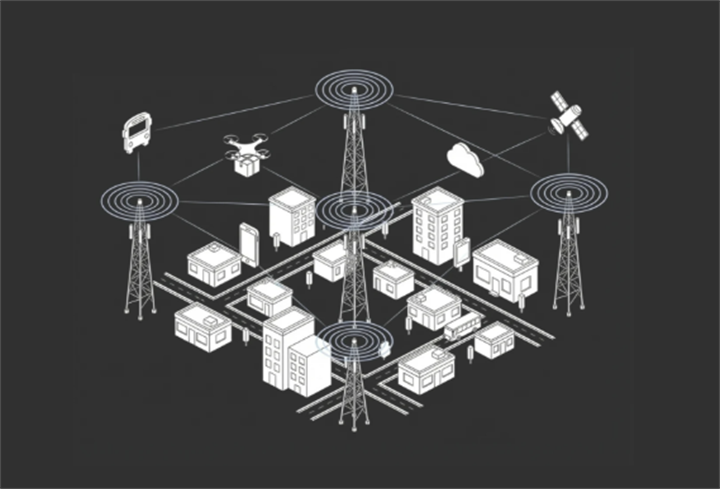
How does SIMI actually operate? Based on the disclosed information, its core architecture relies on multimodal processing. “Multimodal” means the system simultaneously processes and connects different types of data—visual images, depth information, and possibly tactile feedback.
In its workflow, SIMI first deconstructs the input data. It identifies the objects in a scene, their material properties (such as rigidity or softness), their motion paths, and how they interact with each other. From this, the system builds an internal, computable physical model.
When a user gives an instruction—for instance, “simulate a glass full of water falling from a table onto a carpet”—SIMI does not retrieve a pre-stored image. It invokes the physical rules it has learned from data. The system calculates the trajectory of the falling glass, the sloshing of the water, and the impact with the carpet in real time, generating a 3D simulation sequence.
The research team emphasizes that this process is not video editing or visual effects compositing. It is a dynamic computation grounded in physical principles. Users can adjust parameters during the simulation and observe how the system computes and displays different physical outcomes.
Potential Applications: An Accelerator for Robot Training and Scientific Computing
From an industrial application perspective, SIMI’s potential is concentrated in areas that demand precise physical simulation.
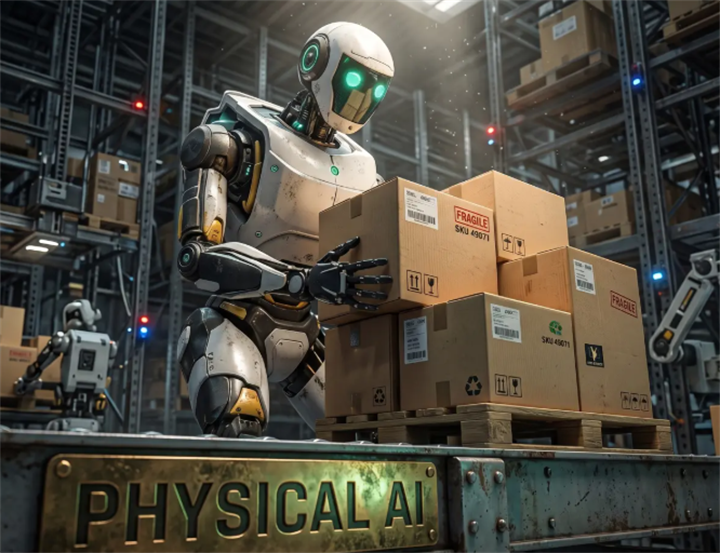
The first is robotics. Today, training a robot to work in a complex environment—say, a home-service robot that must grasp fragile objects—is extremely expensive. Every real-world trial risks damaging equipment or materials.
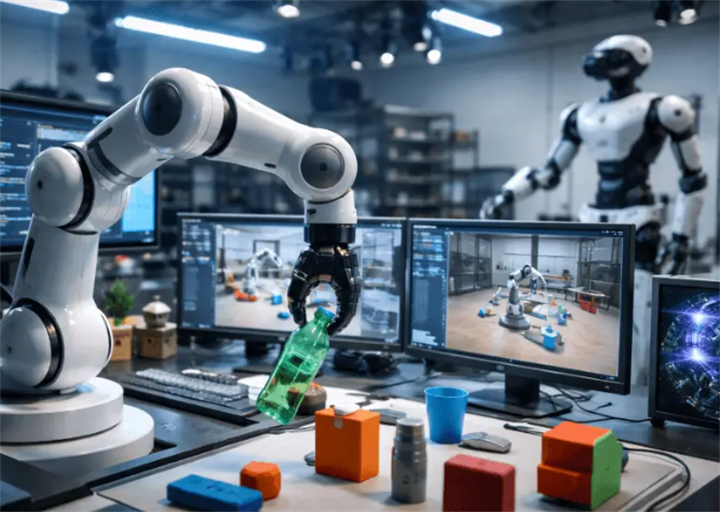
The virtual environments SIMI provides allow robots to train in parallel at a massive scale under highly realistic conditions. This means robots can learn to handle thousands of physical interaction scenarios in simulation before they ever touch the real world. Google DeepMind’s team has noted that this offers an efficient and low-risk training tool for robotics research.
The second area is fundamental scientific research. In fields like fluid mechanics and materials science, researchers often construct elaborate physical simulations to test theoretical hypotheses. SIMI can learn from experimental observation data, helping to identify physical phenomena that are not yet clearly described by mathematical formulas.
It should be noted, however, that this capability is still in the validation stage. Its practical effect in real scientific workflows awaits further case studies.
Beyond these, SIMI could help content creators and engineers rapidly produce physically plausible visual effects and prototype scenes. Looking further ahead, this kind of technology may become infrastructure for building digital twins and virtual worlds, ensuring that virtual environments are not just visually convincing but also obey the same physical rules as reality.
Challenges: Accuracy, Generalization, and Ethics
Every emerging technology faces a gap between the lab and practical deployment, and SIMI is no exception. Several key challenges remain unresolved.
The first is simulation accuracy and generalization. The physical rules SIMI learns from data may perform well in familiar scenarios, but are they reliable in extreme conditions or situations for which no training data exists? This touches on the question of robustness—the system’s ability to maintain stable performance in unseen scenarios.
Currently available test data is insufficient to draw definitive conclusions on this point.
The second is the limitation in interpretability. Unlike traditional physics engines based on explicit mathematical formulas, data-driven models are often difficult to interpret directly in their internal representations. This means that when SIMI’s simulation shows a deviation, researchers may face extra difficulty in identifying the root cause.
Perhaps more pressing is the ethical risk that comes with enhanced capability. When AI can produce not only static images and videos but also physically coherent dynamic events, distinguishing truth from fabrication becomes much harder.
Research institutions generally agree that the development of such technologies must proceed in tandem with the construction of safety frameworks and ethical guidelines, rather than addressing them as an afterthought.
A Rational Outlook: An Evolving Technological Exploration
Looking back at DeepMind’s trajectory—from AlphaGo mastering the game of Go to AlphaFold solving the protein-structure prediction problem—one can observe a consistent theme: enabling AI systems to grasp and utilize structured, law-like knowledge.
SIMI extends this direction, pushing the boundaries of AI from the realm of language and symbols into the more foundational domain of physical laws.
Judging from industry trends, physical AI is becoming a focus of attention for multiple research institutions and technology companies. The release of SIMI provides a noteworthy technical sample for this direction.
Yet it is important to maintain a clear-eyed view: moving from a current laboratory demonstration to broad industrial deployment still requires solving a series of technical and engineering problems. The ultimate value of the system depends on whether its performance in real application scenarios can withstand rigorous testing.
A new era of AI-powered physical simulation may indeed be unfolding, but what follows the opening act remains to be written by time and practical evidence.
References
[1] DeepMind. “SIMI: A Multimodal System for Learning and Simulating Physical Interactions.” Google DeepMind Blog, May 2026.
[2] Hassabis, D. “The Next Frontier for AI: World Models and Physical Intelligence.” CNBC Interview, Jan 2026.
[3] NVIDIA Corporation. “Cosmos World Model Platform Technical Whitepaper.” NVIDIA Developer, 2025.
[4] Li, F. “Spatial Intelligence and the Future of World Models.” World Labs Keynote, Feb 2026.
[5] Coatue Management. “Physical AI: Market Sizing and Investment Landscape.” Industry Report, 2026.
About the Author
Ethan Carter focuses on AI chips, semiconductor technology, and computing infrastructure. His work covers GPUs, AI accelerators, edge AI processors, and the hardware systems that power modern artificial intelligence. He writes analytical articles that connect technical developments with industry trends and practical applications.
Editor’s Note
This article draws on publicly available materials released by Google DeepMind and broader industry analysis to present a balanced overview of the SIMI system. It is intended for informational purposes only and does not constitute investment or technical advice. Physical AI remains a rapidly evolving field, and many of the capabilities discussed are in the early stages of validation. Readers are encouraged to consult primary sources and updated technical reports for the latest developments.
Recommend:

How Should the World Choose Fourth-Generation Nuclear Power?

The Composite Ceiling of Vision-Only: The Unsolved Challenges Behind Tesla FSD's Zero-Intervention Feat

Next-Gen AI Finally Understands the Physical World – A 'Silent Tsunami' Reshaping Autonomous Driving, Architecture, and Gaming

Going Unmanned Isn’t About Removing Pilots—It’s About Rebuilding Flight Capability: AI and 5G-A Transform Low-Altitude Aviation