
May 29, 2026, 7:48 a.m. ET | ⏱️11–13 minutes
By Daniel Brooks
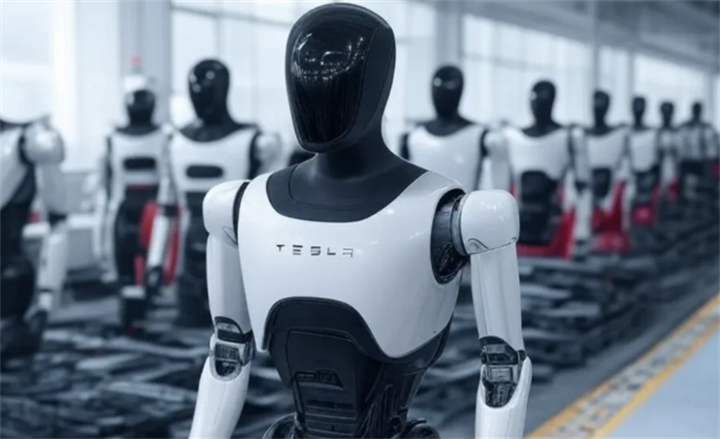
In spring 2026, Tesla made a bold decision.On May 21, 2026, the last Model S and Model X rolled off the line at the Fremont factory, according to media reports.
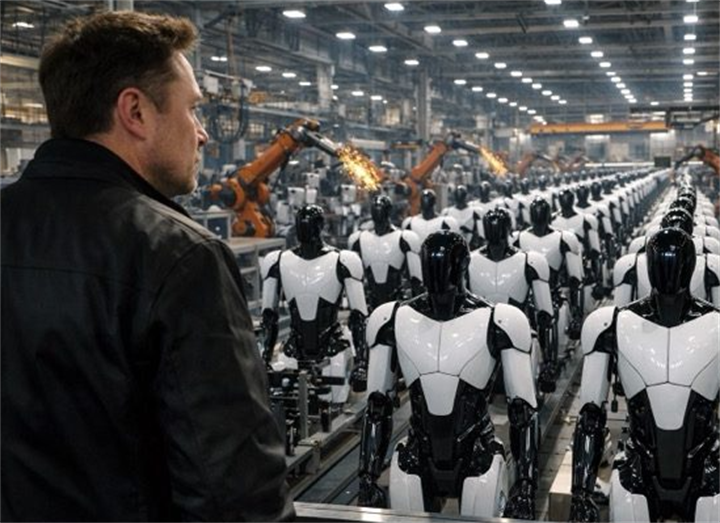
About a hundred days later, that same line – completely rebuilt – will restart. But this time, it won't build cars.
It will build the Optimus Gen 3 humanoid robot.
1. Ambitious production targets vs. a cautious start
Just looking at the numbers, Tesla's robot plan is impressive.
According to the company's Q1 2026 earnings call, the first Optimus line at Fremont has a design capacity of 1 million units per year.
A second line planned at the Texas Gigafactory has a longer-term target of 10 million units per year, with production expected to start in 2027.
But behind those numbers, the start is quite careful.
On the same call, Elon Musk said the Optimus has about 10,000 unique parts – and none of them has ever been mass-produced before.
Given that the original goal of producing roughly 10,000 units in 2025 was not fully met, and that the product was not yet ready for real factory work, Tesla acknowledged in early 2026 that no Optimus was yet doing useful work on the factory floor.
On the spending side, media reports from April 2026 said Tesla's capital expenditures for the year would exceed 25billion–aclearincreasefromtheearlierforecastofabout25billion–aclearincreasefromtheearlierforecastofabout20 billion.
2. Why the car factory is seen as the best place to start
From an industry research perspective, it's no coincidence that car factories are the first choice for humanoid robots.
A key idea: the main advantage of a humanoid robot is that it works as a "compatibility layer" for the existing world.
Factories and warehouses were built for human bodies and human movements. If you try to replace a person with a wheeled robot arm, you often have to rebuild the workstation.
But if you use a robot that walks, reaches, and grabs like a person, the physical space hardly needs to change – only the software needs to be updated.
Tesla's special advantage is that it plays three roles at once: R&D lab, first customer, and data collection center – its own factory lines are the real-world training ground for its robots.
As of May 2026, multiple industry media outlets reported that Tesla had deployed roughly 1,000 to 1,500 Optimus robots across its global factories.
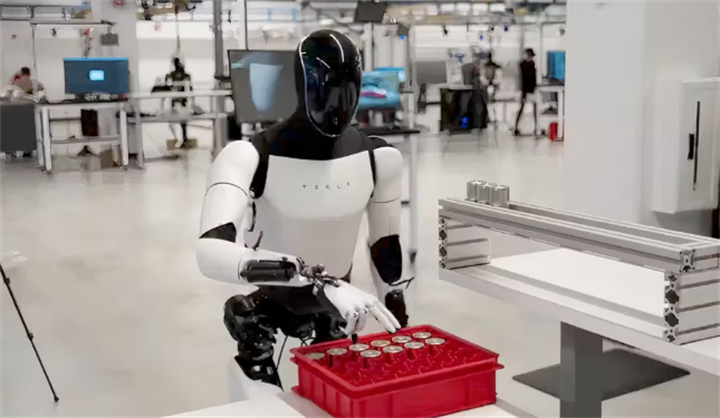
In the U.S., the Texas factory's Optimus units were reportedly handling about 35% of 4680 battery cell sorting.
In China, media reports said about 50 Optimus robots were already working on seat installation and interior assembly at the Shanghai factory, collecting process data before mass production.
It's worth noting that these deployments are still focused on data collection and performance testing. Most market analysts agree that there is still a long way to go from pilot programs to large-scale commercial deployment.
3. Optimus's core technical idea: reuse, not reinvent
The design philosophy behind Optimus is worth explaining separately.
According to industry analysis, Tesla did not build a new AI system from scratch for its robot. Instead, it directly reused the technology stack from its cars.
Optimus uses the same vision-based approach as Tesla cars, with its own AI5 chip and the FSD neural network.
Thanks to training on the Dojo supercomputer, the time to train a single action has reportedly dropped from about 48 hours to about 2.5 hours.
This is a unique advantage for Tesla: its cars already did a huge amount of the engineering validation and supply chain building. Optimus is essentially standing on those existing foundations.
4. The dexterous hand and sensors: key technical details
On the hardware side, the biggest upgrade in the Optimus Gen 3 is its dexterous hand.
According to Tesla's official Gen 3 production video released in March 2026, the hand has 22 degrees of freedom. It uses a hybrid drive system combining planetary gearboxes and tendons, with drive motors moved into the forearm – reducing the weight of the palm by more than 60%.
Reported fingertip precision is about 0.08 mm, with an error rate below 0.3%. This is theoretically precise enough for fine assembly tasks like screwing and part sorting.
Reportedly, Gen 3 can perform more than 3,000 different manipulation tasks.
But whether this design can survive long-term, repetitive factory use is still a question that needs time to answer.
Even Tesla's own development process shows this challenge. In April 2026, media reports said Tesla filed five patents related to dexterous hands.
However, Musk later revealed on X (formerly Twitter) that one design using a specific rolling-contact mechanism had been abandoned during testing due to reliability and precision problems, and the company had changed the design.
This shows that even a well-resourced company cannot bypass the basic laws of physics and mechanical engineering.
5. Supply chain: a global pattern and structural dependency
An interesting industry trend is how dependent Optimus's parts are on global supply chains.
According to 2026 industry supply chain data, roughly 60% to 70% of Optimus's core components come from Chinese suppliers.
Media reports list key suppliers such as:
Tuopu Group (actuator assembly, with a Mexican plant targeting 300,000 sets in Q2 2026)
Sanhua Holding Group (joint modules, with an order worth about $685 million)
Keli Sensing (six-axis force sensors in validation)
Zhaowei Electromechanical (dexterous hand drive modules)
Earlier industry analysis suggested that without Chinese supply chains, the manufacturing cost of a single Optimus could jump from around 46,000toaround46,000toaround130,000.
It's worth noting that Tesla China has publicly said that market rumors about mass-producing Optimus at the Shanghai factory are a misunderstanding – there are currently no specific plans for production in Shanghai.
That said, this high level of supply chain dependency also carries structural risks. Geopolitical factors, export control changes, and the stability of key component supplies could all introduce uncertainty during the production ramp-up.
Industry observers point out that 2026 will be a critical validation year for the Optimus supply chain.
6. Scenario penetration: from factory to home
Industry analysts generally agree that humanoid robots will follow a clear path: first factory validation, then commercial scenarios, and eventually home exploration.
Right now, Optimus is focused on parts transport, light assembly, and quality inspection inside car factories.
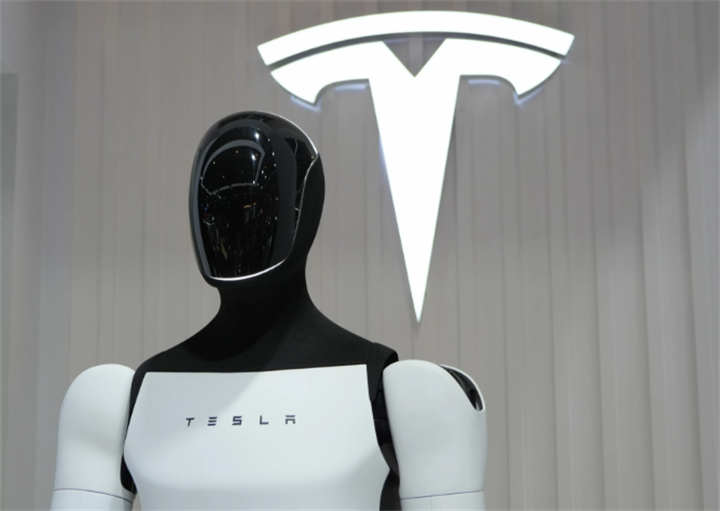
According to reports, Tesla's plan is to start customer deliveries to businesses in the second half of 2026, and to open consumer deliveries to homes by the end of 2027.
However, there is some uncertainty around this timeline – the launch of Optimus Gen 3 was already slightly delayed from earlier in the year, which shows that balancing technical readiness with mass production is still an ongoing challenge.
An important fact is that Optimus is currently positioned as a tool to replace repetitive physical work that "people are already doing but would rather not do."
Its competitive advantage is not in per-task speed – at least in the short term, it may not be faster than specialized automation. Its advantage is in flexibility.
Traditional automation equipment, when a car model or process changes, often requires major rework of tooling, cycle times, and programming – at high cost.
A humanoid robot, in theory, only needs software updates, with almost no hardware changes. This "replace the person, don't rebuild the factory" idea could offer real cost advantages in environments where production tasks change frequently.
7. Competitor snapshot: a diverse global landscape
The competitive landscape for humanoid robots is taking shape, but players have very different strategies.
Figure AI with BMW provides some of the most detailed public data.
According to BMW's early 2026 announcement, two Figure 02 robots ran for about 10 months on the BMW X3 body line in Spartanburg, South Carolina.
They worked one 10-hour shift per day, five days a week, handling repetitive sheet metal feeding for welding fixtures.
They logged more than 1,250 hours of operation, moved over 90,000 parts, and helped produce about 30,000 BMW X3 vehicles.
It's worth noting that independent analysis points out those 1,250 hours represent only about 29% of the theoretical capacity for round-the-clock operation (about 4,000 hours).
Also, the robots' cycle time (about 2.5 minutes) was slower than the target of about 84 seconds, and slower than a skilled human worker on the same line (about 30 to 60 seconds).
This shows that even the most advanced projects still have a long way to go before humanoid robots can efficiently replace human workers in real industrial settings.
Boston Dynamics' parent company, Hyundai Motor Group, has more concrete targets.
According to information from Hyundai's May 2026 investor meeting, the group plans to reach annual production of 30,000 Atlas robots by 2028, and to deploy more than 25,000 of them across its global manufacturing network of Hyundai and Kia plants.
Agility Robotics' Digit has signed a commercial agreement with Toyota's Canadian manufacturing subsidiary to deploy seven robots for logistics handling at its Woodstock, Ontario plant.
8. Different long-term expectations
There is a wide gap in industry forecasts for the future humanoid robot market.
According to a 2025 report by Morgan Stanley Research, the global installed base of humanoid robots could reach about 1 billion units by 2050, with annual revenue potential of roughly 5trillionto5trillionto7.5 trillion (including supply chain, maintenance, and support services).
The same report estimated China's share at about 300 million units by 2050, or roughly 30% of the global total.
By contrast, Elon Musk has made much more aggressive predictions – that long-term global demand for humanoid robots could reach about 20 billion units.
He also forecast production of roughly 50,000 to 150,000 units in 2026, and a target of 50 million units per year by 2030.
There is a significant order-of-magnitude gap between these two sets of predictions. That gap reflects very different assumptions about how quickly technology will spread, how fast costs will fall, and how broad the use cases will ultimately be.
Conclusion:
Looking back at the Optimus factory plan, one observation is worth noting:
What Tesla is doing is less about "designing a more flexible humanoid robot" and more about "building a factory that can mass-produce humanoid robots."
From Fremont to Texas, from a design capacity of 1 million to 10 million units a year, the core challenge may not be the AI algorithms themselves.
It lies in the more basic – and more tedious – aspects of mass manufacturing: building the parts supply chain, validating the long-term durability of transmission components, and solving engineering bottlenecks like the dexterous hand that are not yet fully overcome.
Humanoid robots certainly have enormous potential value. Industrial manufacturing, logistics, and even future home services could be transformed.
But the Optimus story is also a reminder that even at this point in 2026, moving from prototype to million-unit mass production requires not just technological leaps, but also deep accumulations of manufacturing know-how, supply chain networks, and engineering experience.
The car factory provides an ideal "training ground" for humanoid robots. But whether the data from that training ground can translate into real industrial productivity may still take more time to prove.
As industry observers have noted: the humanoid robot story has only just turned from the lab to the factory chapter. Ahead are chapters on commercial use, on homes, on society – each harder to write than the last.
But at least the first page has been turned.
Editor’s Note
This article synthesizes publicly available information from Tesla’s earnings calls, media reports, and industry analysis as of May 2026. The humanoid robotics sector is moving rapidly, and production timelines, technical specifications, and supply chain structures remain subject to change. Readers are encouraged to treat specific numbers (especially near-term production targets and cost estimates) as directional rather than guaranteed. The core argument – that automotive assembly lines offer a uniquely suitable but still challenging proving ground for humanoid robots – appears robust across available sources.
About the Author
Daniel Brooks covers the intersection of technology, business, and industrial transformation. His reporting focuses on robotics, advanced manufacturing, cloud computing, and emerging technology markets. He aims to provide clear, evidence-based analysis of how technological innovation is reshaping industries worldwide.
References
[1] Tesla, Inc. (2026, April). Q1 2026 Earnings Call Transcript.
[2] BMW Group. (2026, January). Figure 02 Pilot Results at Spartanburg Plant (company announcement).
[3] Hyundai Motor Group. (2026, May). Investor Presentation: Robotics and Automation Roadmap.
[4] Morgan Stanley Research. (2025). Humanoid Robots: The $5 Trillion Opportunity (industry report).
[5] Various industry media reports (Reuters, Bloomberg, Electrek, April–May 2026) covering Optimus supply chain, dexterous hand patents, and factory deployments.
Recommend:
When the Brain Connects to Machines: What Brain-Computer Interfaces Can and Can’t Do Right Now
The "Second Battlefield" of AI Chips: Why Edge Computing Has Become a Must-Win for Tech Giants

Next-Gen AI Finally Understands the Physical World – A 'Silent Tsunami' Reshaping Autonomous Driving, Architecture, and Gaming
Behind the AI Chip Boom: ABF Substrate Shortages, Engineering Trade-offs, and Real Demand