
May 25, 2026, 10:37 a.m. ET | ⏱️11–13 minutes
By Daniel Brooks
When videos of Boston Dynamics' Atlas performing backflips and parkour continue to impress audiences online, a very different path is unfolding on the other side of the Pacific. Chinese companies are quietly deploying robotic arms into automotive production lines for quality inspection and material handling tasks.
In May 2026, reports that Unitree Robotics was accelerating its push toward becoming China's first publicly listed humanoid robot company, combined with Tesla's Optimus appearing at an exhibition near the finish line of the Boston Marathon, once again placed humanoid robots in the global spotlight. Yet investor enthusiasm has been noticeably restrained. After months of correction, humanoid robotics stocks have seen only modest rebounds, a sharp contrast to the excitement of a year earlier.
Some market observers argue that the industry is moving beyond trading on long-term expectations and focusing instead on a more fundamental question: Can humanoid robots become a sustainable and profitable business?
For global readers, this tension between industrial enthusiasm and investor caution offers a useful lens through which to examine how humanoid robots are beginning to move from laboratories into real-world environments.
Drawing on data from the International Federation of Robotics (IFR), brokerage research reports, corporate disclosures, and recent industry interviews, this article explores the likely sequence of humanoid robot adoption across factories and households. While acknowledging the considerable uncertainties that remain, it aims to provide a practical framework for understanding where the industry may be headed.
The Race for the "First Stock": Capital, Supply Chains, and the Logic of Going Public Early
Who Is Competing for the Title?
As of mid-2026, the only publicly listed company primarily focused on humanoid robots remains UBTech Robotics, which debuted on the Hong Kong Stock Exchange in late 2023. However, challengers are moving quickly.
Public disclosures indicate that Unitree Robotics has completed its IPO preparation process and plans to list during the first half of 2026. The company is widely viewed as a leading contender for the title of China's first A-share humanoid robot company. Other firms, including AgiBot and CloudMinds, have also completed multiple large financing rounds and announced plans for limited-scale mass production.
According to statistics cited by Dongwu Securities, Unitree shipped more than 5,500 robots in 2025, while AgiBot exceeded 5,100 units. UBTech reported annual orders worth approximately $200 million. All three figures represent substantial year-over-year growth, suggesting that manufacturing capacity is expanding rapidly.
Policy support has also strengthened the sector. In February 2026, China's Ministry of Industry and Information Technology released the Humanoid Robot and Embodied Intelligence Standards Framework (2026 Edition), a top-level guidance document covering the entire industry value chain. Such comprehensive policy signals are relatively uncommon globally and provide companies with a more predictable environment for long-term investment and capital raising.
The Capital Market Logic: List First, Perfect Later
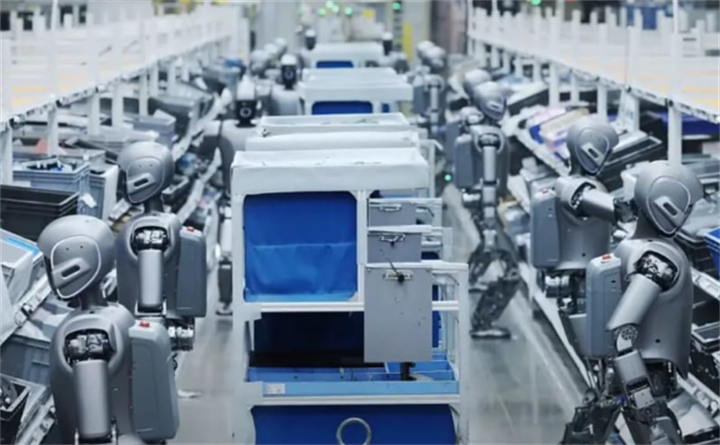
Many market observers have noted that several leading humanoid robot companies appear eager to go public before their products are fully mature and before their commercial applications have been thoroughly validated.
In an interview with Hexun, Xu Guangtan, Chief Machinery Industry Analyst at CSC Financial, argued that investors are no longer satisfied with distant visions of the future. Instead, they increasingly want evidence that companies can establish sustainable and profitable business models. At present, he suggested, industry participants appear more confident about technological progress than the capital markets themselves.
This strategy can be summarized as "racing to list." Companies seek funding from public markets to accelerate R&D and deployment rather than waiting for technologies to fully mature.
The approach carries obvious risks. If critical performance metrics fail to improve as expected, investor confidence could weaken significantly. Yet the underlying rationale is straightforward: lowering costs and improving intelligence both depend heavily on large-scale real-world data collection and continuous supply-chain optimization. Public-market financing provides resources for both. In this sense, early listing is not merely a financial strategy but an industrial one.
Vertical Integration and Cost Control
Unitree's general-purpose humanoid robot, the G1, carries a price tag of roughly $14,000—far below some publicly discussed expectations for comparable Western products. The figure surprised many international observers.
Industry analyses suggest that much of this cost advantage stems from the mature and highly concentrated robotics supply chain in China's Pearl River Delta region.
According to brokerage data cited by Bowang Finance in March 2026, the price of planetary roller screws—a critical motion-control component—fell from approximately $1,400 per unit in 2023 to around $280, representing an 80% decline. Harmonic reducers, another key precision component, reportedly experienced price reductions of more than 40%.
The same source estimated that the core component cost of Tesla's Optimus declined from roughly $57,000 per unit in 2023 to approximately $19,000.
Importantly, this advantage does not necessarily imply leadership in every individual technology. Rather, it reflects the efficiency of an integrated manufacturing ecosystem. By contrast, Tesla's approach emphasizes achieving unprecedented production scale to spread fixed costs and R&D expenditures across large volumes.
It remains unclear which model will ultimately prove more successful. What is clear is that both approaches are reshaping expectations about how quickly humanoid robot costs may fall.
Factory Production Lines: The First Clearly Defined Use Case
The Humanoid Robot Entering Factories May Not Look Like You Expect
When people imagine humanoid robots in factories, they often picture fully mobile, bipedal machines walking freely across production floors.
Reality is far more restrained.
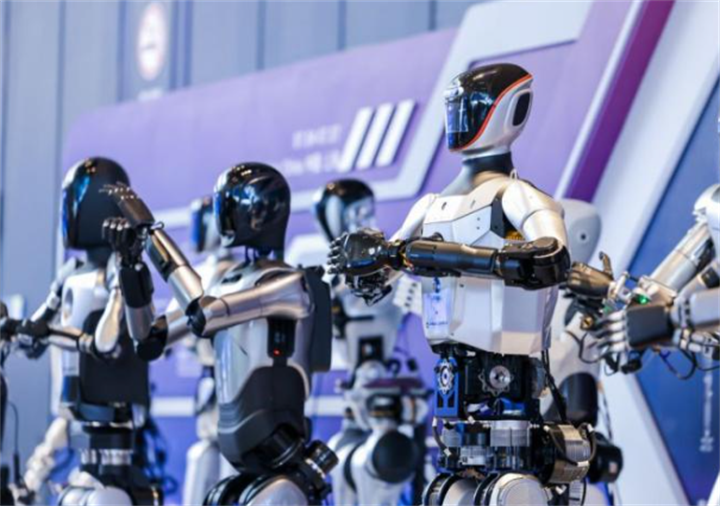
According to company demonstrations and media reports, testing of UBTech's Walker S series in factories operated by automakers such as NIO has focused on tasks including door-lock inspections, seatbelt buckle verification, and vehicle badge installation. In many cases, the robot's lower body is fixed in place or subject to limited movement.
Meanwhile, media reports from early 2026 suggest that automakers including BYD and Zeekr have already deployed humanoid robots in smart factories for logistics transport and component assembly. Some models reportedly support autonomous battery replacement in as little as three minutes.
Even in these advanced deployments, however, robot functions remain confined to relatively controlled and semi-structured environments.
This is not necessarily a compromise driven by technological limitations. Rather, it reflects rational decisions based on precision, safety, and return on investment. Fixing the upper body to a workstation or mounting it on a wheeled base reduces vibration and positioning errors, lowers energy consumption, and avoids safety challenges associated with bipedal locomotion in industrial settings.
Similar trends can be observed elsewhere. Early deployments of Agility Robotics' Digit in warehouse environments have also focused on narrowly defined and carefully managed tasks.
Flexible Manufacturing Creates a Real Business Case
Why are manufacturers interested in what often resembles a robotic arm combined with an advanced vision system?
The answer lies in the growing demand for flexible manufacturing.
Across global manufacturing, companies increasingly need to switch rapidly between product models on the same production line. This trend is especially pronounced in the electric vehicle sector, where product cycles are becoming shorter and more frequent.
Traditional industrial robots offer exceptional speed and precision. However, when product specifications change, reprogramming and tooling modifications can take weeks.
Humanoid-style robotic systems equipped with AI vision, force sensing, and dexterous hands may eventually adapt to certain variations through limited-example learning. If successful, they could significantly reduce costly production changeovers.
Xu Guangtan offered a controversial observation. Despite decades of development, annual global industrial robot sales remain around 500,000 units. According to IFR data, approximately 540,000 industrial robots were installed worldwide in 2023, and annual volumes have remained at a similar level in recent years.
He argues that this number falls far short of global labor-substitution demand, suggesting that industrial robots have not fully solved the flexibility problem. Traditional robots struggle with tasks requiring adaptation, while humanoid systems may eventually overcome this limitation through a combination of vision, manipulation, and generalized intelligence.
A 2023 Goldman Sachs report on humanoid robots similarly noted that achieving task success rates consistently above 99% in semi-structured environments is likely to be a prerequisite for large-scale commercial adoption. Most current products have yet to publicly demonstrate that level of reliability.
Nevertheless, reports from some automotive factories suggest that a single humanoid robot can replace two to three workers while generating annual cost savings of roughly $21,000, creating a tangible economic incentive for adoption.
Why Wheels May Win Before Legs
Many robotics researchers argue that while bipedal locomotion has advanced significantly, its advantages are limited on flat factory floors.
In most indoor industrial environments, wheeled platforms or fixed-base systems remain more cost-effective and reliable.
Xu Guangtan argues that motion control has matured rapidly over the past two years. The industry has progressed from robots capable of little more than standing still for demonstrations to machines capable of competing in robot marathons. In his view, movement is no longer the primary bottleneck.
The next challenge lies in perception, particularly sensing technologies.
To become genuinely useful, robots must detect dust, identify screws, and accurately assess force and contact conditions. These requirements place growing demands on visual and force sensors.
As a result, Xu identifies sensors as one of the most attractive segments of the humanoid robot value chain, citing high technical barriers, favorable competitive dynamics, and potentially strong margins.
Taken together, many companies appear to be pursuing a strategy that could be described as "designing the form around the application." Rather than aiming immediately for fully general-purpose humanoids, they are entering industrial markets with simplified configurations that generate revenue and real-world data before gradually expanding toward more complex mobile systems.
Whether this approach will outperform more ambitious strategies remains uncertain. What is clear is that factories have become the first serious testing ground for humanoid robot commercialization worldwide.
Home Services: Gradual Evolution and the Unsolved Final 10%
The First Home Robot May Not Be a Humanoid Butler
When people think about robots in the home, popular imagination often jumps to science-fiction visions of all-purpose robotic servants.
A more cautious assessment suggests a different outcome.
The first robots to achieve large-scale household adoption are likely to evolve from products that are already widely accepted: robot vacuum cleaners.
Companies such as Ecovacs, Dreame, and Roborock have established significant global market positions. Many are now integrating AI vision systems and robotic arms into premium products, enabling capabilities such as picking up socks or avoiding charging cables.
This evolutionary path—from specialized tool to limited service platform—offers major advantages in technology development, user familiarity, and distribution.
At the same time, more humanoid-like experiments are beginning to emerge.
According to reports from March 2026, Galaxy General Robotics has demonstrated dexterous hands capable of tasks such as cracking walnuts and folding clothes. Companion robots developed by Songyan Dynamics use large AI models to support conversational interaction. Some products are reportedly approaching price points around $4,200.
In certain eldercare facilities, companion robots have begun assisting with rehabilitation exercises and delivering news updates.
However, these deployments remain limited to carefully controlled environments and should not be confused with mass-market consumer products.
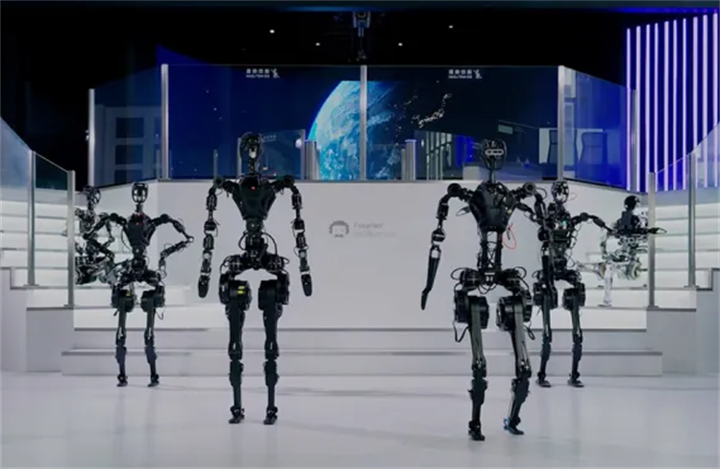
The Three Stages of Commercialization
Xu Guangtan describes humanoid robot commercialization as a three-stage process:
First comes commercial entertainment.
Second comes industrial deployment.
Only then comes household adoption.
He argues that the first stage has already achieved a viable business model. Robots can generate recurring revenue through rentals, performances, and public events.
Industrial adoption is now advancing through its second stage.
The household market, however, faces far stricter requirements.
First, robots must become true plug-and-play products. Consumers should be able to use them without professional installation or extensive maintenance, much like purchasing a smartphone.
Second, safety and reliability standards must reach extremely high levels.
Xu notes that some AI companies now claim task success rates approaching 95%. Yet for robots operating in close proximity to humans inside homes, even 99.5% reliability may not be sufficient.
Robot marathon demonstrations continue to reveal potentially dangerous falls and recovery behaviors. These examples highlight how much higher the safety threshold becomes when robots move from factories into living rooms.
The Long-Tail Challenge of Everyday Housework
Technical assessments suggest that enabling robots to reliably perform common household tasks—washing dishes, doing laundry, organizing objects, and more—requires far more than improvements in grasping or navigation.
The deeper challenge lies in handling unexpected situations.
Consider a simple cleaning task. A robot may be instructed to remove spilled liquid from the floor. But what if broken glass is mixed into the spill?
Current AI systems often struggle to recognize and safely respond to such unusual combinations of circumstances.
These rare but endlessly varied situations are often referred to as long-tail scenarios. They represent one of the greatest barriers to fully autonomous operation in home environments.
Many industry participants believe the primary bottleneck now lies not in the robot's body but in its brain.
Xu argues that hardware challenges increasingly revolve around durability and cost reduction. The larger obstacle is the development of more capable AI models, along with the data required to train them effectively.
He estimates that the first generation of broadly capable embodied intelligence systems may emerge within three to five years. If that proves accurate, more meaningful progress in home robotics could follow.
Even so, considerable uncertainty remains. Before then, household robotics is likely to advance primarily through increasingly intelligent appliances rather than through the sudden arrival of fully capable humanoid assistants.
Conclusion: A Global Experiment in Progress
Whether through the pragmatic deployment of semi-fixed robotic operators in factories or the gradual evolution of robot vacuums into more capable home assistants, a broad sequence of adoption is beginning to emerge.
Over the next five years, controlled industrial environments are likely to see a growing number of humanoid robot applications. Household adoption, by contrast, will depend on simultaneous advances in AI models, safety standards, reliability, and cost reduction.
Dongwu Securities estimates that global humanoid robot production could exceed 30,000 units in 2026 and potentially reach one million units by 2030. However, the uncertainty surrounding such forecasts remains substantial.
The debate over China's first publicly listed humanoid robot company, combined with the country's vast manufacturing base, has made China one of the most important regions to watch in the industry's development.
Yet the broader questions remain unresolved. Will humanoid robots ultimately prove to be the most effective solution to labor shortages and flexible manufacturing challenges? And when, if ever, will they become mainstream consumer products?
The answers will not be determined by any single country. Instead, they will emerge from the interaction of global supply chains, advances in fundamental research, and evolving safety standards.
As some industry participants have observed, humanity may be witnessing the early stages of its first true robot industry revolution. Every inspection task completed and every component moved on a factory floor today may represent one small step toward that future.
References
[1] International Federation of Robotics (IFR), World Robotics Reports 2024–2025.
[2] Goldman Sachs Research, The Humanoid Robot Opportunity (2023).
[3] China's Ministry of Industry and Information Technology (MIIT), Humanoid Robot and Embodied Intelligence Standards Framework (2026 Edition).
[4] Dongwu Securities, Humanoid Robotics Industry Research Reports (2025–2026).
[5] Corporate disclosures and public demonstrations from Unitree Robotics, UBTech Robotics, Tesla Optimus, Agility Robotics, and related industry participants.
About the Author
Daniel Brooks covers the intersection of technology, business, and industrial transformation. His reporting focuses on robotics, advanced manufacturing, cloud computing, and emerging technology markets. He aims to provide clear, evidence-based analysis of how technological innovation is reshaping industries worldwide.
Editor's Note
Humanoid robotics remains one of the most closely watched sectors in advanced manufacturing and AI. While recent progress has been substantial, many projections regarding deployment scale, cost reductions, and consumer adoption remain highly uncertain. This article focuses on current industry trends and publicly available information rather than making definitive predictions about future outcomes.
Recommend:
Why Aren't 3D-Printed Homes Everywhere, Despite Lower Costs Than Brick-and-Mortar?

Going Unmanned Isn’t About Removing Pilots—It’s About Rebuilding Flight Capability: AI and 5G-A Transform Low-Altitude Aviation
Starship V3’s Global Reverberations:How Low-Cost Access to Orbit Is Redrawing the Space Industry Map

Next-Gen AI Finally Understands the Physical World – A 'Silent Tsunami' Reshaping Autonomous Driving, Architecture, and Gaming