May 29, 2026, 15:33 p.m. ET | ⏱️10–12 minutes
By Olivia Bennett
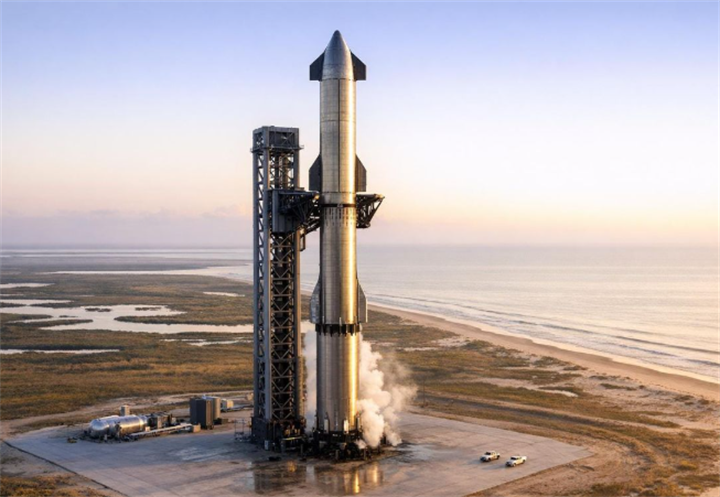
On May 23, 2026, SpaceX conducted the first integrated flight test of the Starship V3 configuration from its Texas facility.
The upper stage successfully demonstrated a controlled return after deploying a payload. However, the Super Heavy booster failed to achieve a soft landing when several engines did not restart.
From an engineering perspective, this was a mixed success. Yet its significance goes far beyond one company’s technical progress.
Starship V3’s massive payload capacity, and the validation of a path toward ultra-low-cost orbital access, are accelerating global competition in space infrastructure.
This article examines the test’s international impact. It analyzes how major space powers are responding and explores the industrial restructuring, governance challenges, and opportunities for developing nations that may follow.
A Landmark Test, but Not a Decisive One
International reactions varied considerably.
Some Australian media ran headlines like “Successful test, then explosion,” emphasizing the dramatic ending. South Korean media viewed the event through the lens of SpaceX’s anticipated IPO. Chinese financial media described it as a watershed moment for commercial heavy-lift systems.
According to public reports, the upper stage deployed about 20 Starlink simulator payloads and splashed down in a designated area of the Indian Ocean.
The booster’s failed recovery, however, exposed reliability problems with restarting multiple engines at once. This indicates that Starship is still some way from stable full reusability.
Industry analyses note that the commercial launch price disclosed to the SEC is roughly $90 million per flight.For payloads of around 150 tons to low Earth orbit, that works out to approximately $600 per kilogram.Analysts estimate the theoretical minimum cost could eventually fall to around $80–200 per kilogram. Whether this reduction materializes depends on variables such as the refurbishment cycle, the number of reuses, and ongoing operational experience.
The Global Industry Landscape: Asymmetric Competition Intensifies
The most immediate impact of the Starship V3 test is the widening gap in launch costs.
According to Fortune Business Insights (May 2026), the global space launch services market was valued at about 5.732billionin2025.Itisprojectedtoreachroughly5.732billionin2025.Itisprojectedtoreachroughly12.798 billion by 2034, with a compound annual growth rate of around 8.7%.
Research by Global Market Insights shows the global space economy is expected to reach about 462.4billionin2026.Itcouldgrowtoaround462.4billionin2026.Itcouldgrowtoaround851.8 billion by 2035. Along this growth curve, different nations are diverging rapidly.
A fundamental trend is taking shape. The technological divide in space transportation is no longer drawn along the traditional line of “advanced versus developing nations.”
It now splits between those who have mastered reusability and those who have not. One side operates on depreciable transport assets. The other still relies on expendable procurement.
United States
The U.S. holds the strongest position in reusable technology.
Beyond SpaceX, Blue Origin’s New Glenn had a successful maiden flight in 2025. Rocket Lab’s Neutron is aiming for 2026, and ULA’s Vulcan Centaur is already operational.
Industry data indicate that more than 180 orbital launches are expected globally in 2026, with commercial missions accounting for over 70%. SpaceX is estimated to hold more than 80% of the U.S. launch market.
If Starship V3 reaches operational scale, North America’s dominance could strengthen further. Meticulous Research notes that the region is expected to retain the largest share of the space economy in 2026, driven by companies like SpaceX and Blue Origin and by substantial government funding.
Europe
Europe faces mounting strategic pressure.
ESA has acknowledged the urgency of transitioning to reusable technology. Reports indicate it is evaluating plans to retrofit the Ariane 6 for partial reusability.
The German Aerospace Center (DLR) was more blunt. A March 2026 assessment reportedly warned that without a Starship-class system, Europe risks serious competitiveness challenges.
On the R&D front, Europe is advancing the Themis reusable demonstrator, a project involving 26 EU companies. Themis is scheduled for low-altitude hop tests from Sweden’s ESRANGE spaceport in 2026.
But compared to Starship V3’s full-scale orbital flight, Themis remains in an early validation phase. The gap in scale is at least an order of magnitude.
Japan
Japan is pursuing a dual-track approach.
JAXA’s H3 rocket successfully reached orbit in April 2026, but the launch cost is high — about ¥5 billion per mission. An industry estimate for a SpaceX Falcon 9 launch is around ¥2.5 billion. This cost gap is significant.
Meanwhile, JAXA is developing the RV-X reusable rocket test vehicle. However, flight tests have been repeatedly delayed due to technical issues as of March 2026.
Notably, the Japanese government approved a revision of the Space Activities Act on March 27, 2026. The revision shifts the regulatory framework from a satellite-centric model to one suited for next-generation space transportation. Japan is preparing its institutions for the reusable rocket era.
India
India’s space sector is advancing on multiple fronts.
ISRO has successfully flown the RLV-TD technology demonstrator. It is now developing the Next Generation Launch Vehicle (NGLV, also called Soorya), targeting about 30 tons to low Earth orbit. This is roughly three times the capacity of the current LVM3.
Private sector activity is also growing. Pune-based Astrophel Aerospace plans a reusable suborbital rocket test in August 2026. Hyderabad-based Abyom is developing a vertical-takeoff-and-landing test vehicle.
India’s path holds particular research interest. If it can establish cost competitiveness in the medium-lift reusable segment, it might capture a niche market that larger players overlook.
China
China is in a period of intensive validation for reusable technologies.
LandSpace’s Zhuque-3 aims to attempt an orbital launch and first-stage recovery in the first half of 2026, with a first reuse flight within the year. Space Pioneer’s Tianlong-3 integrates more than 50 core technologies and targets an annual production capacity of 30 units, directly benchmarking the Falcon 9.
Galactic Energy’s Pallas-1 and i-Space’s Hyperbola-3 are also planning maiden flights in 2026. China’s commercial space sector is shifting from technology validation to industrial application, with reusability as the core variable.
International observers note that the concentrated debut of Chinese reusable rockets is occurring in a kind of competitive synchronicity with Starship V3’s test.
Emerging Space Nations: Opportunities and Dilemmas
For emerging space nations with limited technical heritage and tight budgets, the low-cost access paradigm is a double-edged sword.
Cheaper launch costs could lower the barrier to entry, enabling these countries to deploy their own satellites at reduced expense. However, autonomous launch capability is an important dimension of national security. Over-reliance on foreign commercial services could create strategic vulnerabilities.
In February 2026, Singapore officially announced the establishment of a national space agency.
This was a notable move. The city-state has no launch site and a land area of only 733 square kilometers. It is focusing on satellite data and high-value space services rather than pursuing its own launch capability.
This shows that in the global space industry’s division of labor, “not having launch capacity” does not necessarily mean “exclusion from the space economy.” Through precise positioning in high-value segments, nations can still participate in the value chain.
But this path depends heavily on a competitive and reasonably priced global launch market. Monopolistic pricing or geopolitically driven supply disruptions would severely limit the strategic space of such countries.
Elsewhere in Southeast Asia, space-related phenomena are gradually capturing public attention. In May 2026, a Chinese Long March 6A rocket created a “space jellyfish” display over the Philippines, drawing local media coverage. This reflects how space activities are moving beyond the exclusive domain of a few powers.
Governance Frameworks Under Pressure
The prospect of super-heavy, high-frequency launches is putting pressure on the existing space governance framework. The implications extend far beyond any single nation.
At the international level, the 65th session of the UNCOPUOS Legal Subcommittee in April 2026 focused on the strain that scaled-up commercial space activities place on current space law. Analysis by Clyde & Co points out that the governance framework was designed for “state activity and scientific exploration.” It is poorly suited to today’s commercialized landscape.
The rapid expansion of mega-constellations is also intensifying competition over spectrum and orbital slots. This issue continues to simmer at the ITU and UNCOPUOS. The “first-come, first-served” approach has become sharper against the backdrop of systems like Starlink.
Meanwhile, international consensus on orbital debris mitigation remains at the level of voluntary guidelines. Binding enforcement mechanisms are absent.
At the national level, spacefaring countries face different stages of regulatory adaptation.
The FAA’s Part 450 rule, implemented in March 2026, consolidated multiple licensing regimes to create a pathway for “airline-like” operations. Japan’s revised Space Activities Act shifted the regulatory focus from satellites to next-generation transportation.
China’s regulatory framework still rests on instruments like the “Measures for the Registration of Space Objects.” New issues raised by reusable rockets — such as liability for re-entering debris and airworthiness standards for reused vehicles — have yet to see dedicated legislative initiatives.
Differences in the pace of regulatory reform may become a hidden variable in the new round of international competition. Early movers in institutional adaptation could gain a first-mover advantage in attracting commercial space investment and talent.
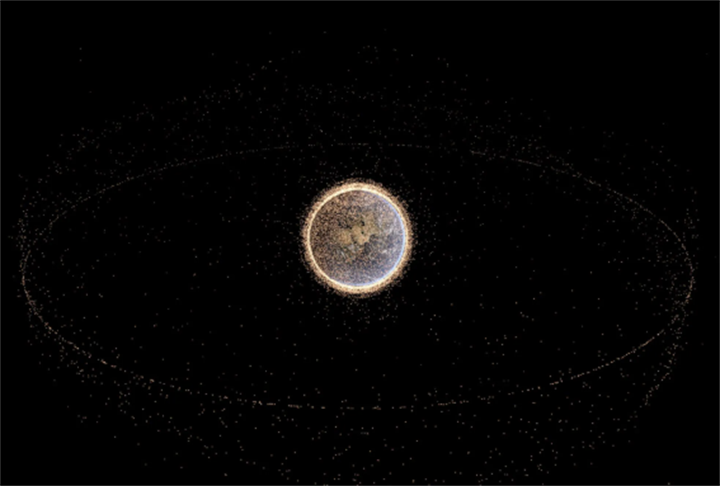
New Applications, Global Competition: The Geoeconomics of Space-Based Computing
Among the new applications enabled by low-cost launch capacity, space-based computing — orbital data centers — is one of the most watched. Its strategic significance lies in the possibility of extending the great-power computing contest from the ground into low Earth orbit.
From a techno-economic standpoint, the orbital data center concept carries a certain physical rationale.
Industry estimates suggest that at comparable scale, the ten-year core cost (excluding AI servers) of a space data center could fall to around 158million.Thisismuchlowerthanroughly158million.Thisismuchlowerthanroughly533 million for a terrestrial facility. The advantage comes mainly from free solar energy in space and radiative cooling in a vacuum.
Starcloud successfully trained an AI model using a commercial NVIDIA H100 GPU in space in December 2025, providing a first proof of concept. SpaceX has also filed applications with the FCC for an orbital data center system, though exact satellite numbers and workload capacity have not been publicly detailed.
This area also carries a distinct global competitive dimension.
In China, the “Xingsuan” (Star Computing) project led by ADA Space launched its 01 group of test satellites in May 2025. Groups 02 and 03 are planned for orbital deployment in 2026.
Industry analysis notes that placing computing infrastructure in space could allow sensitive data processing to circumvent some terrestrial legal oversight. If the migration of computing infrastructure from ground to space becomes a trend, international disputes over orbital frequencies, spatial jurisdiction, and data sovereignty could become even more complex.
Preliminary Judgments and Uncertainties
Based on the above global analysis, several preliminary conclusions can be drawn.
First, the technology gap is widening. This is a trend in progress, not a future possibility.
SpaceX’s Falcon 9 launch cadence (roughly 170 missions in 2025) and reuse records (some boosters have flown over 30 times) indicate that reusability has entered a mature operational phase. Starship V3 is an extension of this trend, not its beginning.
By comparison, Europe’s and Japan’s reusable technologies are still in demonstration or planning stages. The gap is at least 5–10 years. However, technology paths do not always follow a simple “first-mover wins” logic. Europe and Japan could still compete if they establish differentiated strengths in niche markets.
Second, the global advent of “spaceflight as public transit” is far from being just a technical question.
Demand-side constraints are real. The global commercial space tourism market remains in the single-digit billions of dollars. This is orders of magnitude smaller than what would be needed to absorb the capacity of dozens of launches per day.
Governance gaps are also significant. Binding debris mitigation standards and multilateral mechanisms for spectrum coordination will require lengthy international negotiation.
According to Meticulous Research, the global space economy may not reach approximately $1.42 trillion until 2036. Demand growth will be a gradual process, not an instantaneous explosion.
Third, the lag in reforming the space governance system has become an increasingly prominent global issue.
Discussions at the UNCOPUOS Legal Subcommittee and unilateral regulatory revisions by various nations reflect a growing consensus that existing institutions are insufficient. However, in the current international environment, translating this consensus into binding multilateral agreements will be difficult.
Fourth, an important but underappreciated uncertainty is the potential fracturing effect of geopolitics on the global space industry’s division of labor.
Some nations, led by the U.S., are restricting cross-border technology flows through export controls. Countries like China and India are narrowing the gap through indigenous innovation.
If geopolitical tensions intensify, the global space industry could split into two relatively independent ecosystems. This would significantly alter the path and speed of efficiency gains.
Whether Starship V3’s cost advantage could be fully realized in a “two-market” world is a question worth continuous observation.
About the Author
Olivia Bennett specializes in emerging technologies, including artificial intelligence, robotics, space technology, and biotechnology. Drawing on industry research and public data, she explores the technological, commercial, and societal implications of major innovations, with an emphasis on balanced and accessible analysis.
Disclaimer
This article is based on publicly available information as of May 2026, including industry research reports, government announcements, and media coverage. It does not rely on internal SpaceX data. Market size estimates are drawn from various research institutions and may differ due to variations in statistical methodologies. This article does not constitute investment advice. Analyses involving global political and economic dynamics contain speculative elements, and readers should be aware of their inherent uncertainty.
Recommend:
Starship V3’s Global Reverberations:How Low-Cost Access to Orbit Is Redrawing the Space Industry Map
Huawei’s “Tao Law” Could Reshape How Future Chips Are Designed

The 2026 AI Chip Landscape: How Long Can NVIDIA’s Solo Performance Last?

Next-Gen AI Finally Understands the Physical World – A 'Silent Tsunami' Reshaping Autonomous Driving, Architecture, and Gaming