
June 1, 2026 8:28 a.m. ET | ⏱️12–13 minutes
By Daniel Brooks
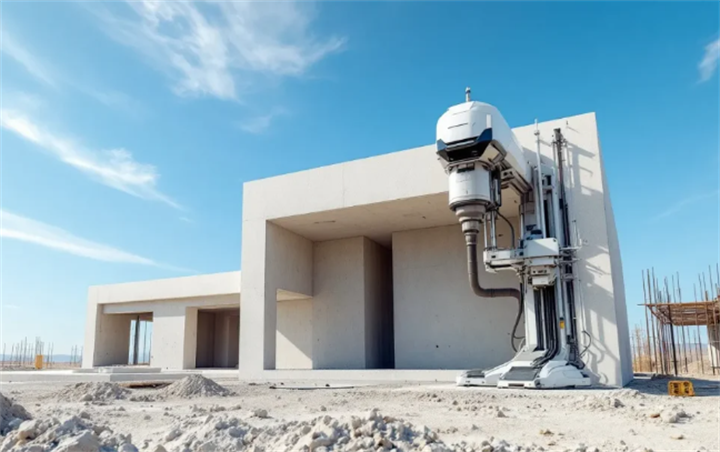
Every so often, news about 3D-printed buildings makes the rounds: a large printer "spits out" a house in a matter of hours, with reports often highlighting lower costs and faster construction.
It's easy to come away with the impression that the construction industry is on the verge of a revolution, with mass adoption just around the corner.
Yet the numbers tell a different story. Industry data suggests that by early 2026, the total number of 3D-printed buildings worldwide that are actually in use and inhabited full-time is still measured in the hundreds. That's vanishingly small compared to the billions of square meters of housing completed globally each year.
Why, after all these years, has a technology described as cheaper and more efficient failed to enter the mainstream? Analysis points to a mix of technical bottlenecks, regulatory barriers, and industrial realities that all feed into one another.
The Limits of "Cost Advantage"
Perhaps the most common misconception about 3D-printed buildings is buried in the "cost per square meter" figure.
Analysts in the construction economics space regularly point out that this number typically covers only the direct expenses of one step: extruding wall material through a printhead. It accounts for the special mortar or concrete used, the amortization of the printing equipment, and the hours put in by on-site technicians.
But the cost of a habitable house goes far beyond this. Foundations, waterproofing, insulation, windows and doors, plumbing, electrical wiring, and interior finishing—these essential tasks still rely on traditional construction methods. Their costs are not eliminated by the printing technology.
A common analogy compares it to calculating the bill of materials for a phone's shell and screen while ignoring the chip, battery, operating system, and assembly. Without those, the shell is just a collection of parts, not a functional product.
The structural challenges go even deeper. Concrete is strong in compression but weak in tension, which is precisely why reinforcing steel exists. However, the layer-by-layer deposition process of 3D printing is fundamentally at odds with the need for continuous steel reinforcement that runs through the structure.
The current workaround is to print hollow wall shells and then have workers manually place rebar inside and pour core concrete. Multiple industry reports note that the material and labor costs of this post-insertion step often exceed the cost of printing the walls themselves.
In its current technical path, 3D printing essentially acts as a sophisticated permanent formwork rather than a standalone structural system. Until this fundamental tension is resolved, the widespread use of 3D-printed walls as load-bearing elements in seismic or high-wind zones will remain severely limited.
This assessment is echoed by some practitioners in the field. In early 2026, a registered structural engineer on a professional forum commented bluntly that 3D-printed construction is "a pseudo-innovation, with higher carbon emissions than masonry, more cumbersome construction, and not necessarily better strength," suggesting it should "first figure out how to outperform masonry buildings."
Such views, while still needing more systematic data for full verification, at least raise a question worth pondering: has the new technology, in direct comparison to the traditional methods it aims to replace, achieved verifiable advantages across all the metrics that actually matter?
Meanwhile, analysts focused on green building have pointed out that the reinforcement techniques for 3D-printed structures are still immature. This limits the most viable current applications to low-rise buildings, which in many global markets don't generate enough demand to drive mass production. This goes some way toward explaining why market pull remains weak even though the technology has been around for years.

The Invisible Barrier of Building Codes
If cost and structure are the technical hurdles, compliance is a regulatory knot that's even harder to untangle.
The modern construction industry operates within a meticulous framework of design codes, construction standards, and inspection procedures. These codes provide clear parameters for established techniques like masonry, cast-in-place concrete, and steel: what mechanical properties to assume, how to design connections, what construction tolerances to allow, and what to test during acceptance.
When a code reviewer opens the book and finds no chapter that defines the shear strength of a 3D-printed interlayer bond, the project cannot be fully assessed in a legal sense.
This isn't just a matter of printing precision; it's a missing "language." Some industry observers describe it this way: a 3D-printed building is a new species born from algorithms, while current building codes are an evaluation framework designed for deterministic processes. It doesn't pass review not because it's underperforming, but because its technical vocabulary hasn't yet been incorporated into the existing standards.
In markets with highly professionalized construction sectors, such as much of Europe and North America, there's an additional layer: liability and insurance. Architects, structural engineers, and contractors each carry clearly defined legal responsibilities, backed by mature professional indemnity insurance. When something goes wrong, there's a clear chain of accountability.
In a 3D-printing scenario, however, the build process is shared among software algorithms, printing hardware, material formulations, and on-site operators. If a wall defect originates in the toolpath design, who bears the long-term safety liability—the software provider, the equipment manufacturer, or the technical team on site?
The insurance industry has been understandably cautious. Without appropriate insurance products, banks are reluctant to issue mortgages for such properties. A building that can't be mortgaged or insured is effectively cut off from the commercial real estate market.
The ViliaSprint² project, completed near Reims, France, in April 2026, offers the latest illustration of this challenge. This three-story apartment building with 12 social housing units is Europe's largest on-site 3D-printed residential structure to date and France's first multi-story building where all vertical loads are carried entirely by printed walls.
Led by social housing developer Plurial Novilia, with PERI 3D Construction using a COBOD BOD2 gantry printer, the team printed the walls in just 34 effective working days. The total construction time of 12 months was about three months faster than conventional methods.
But one set of figures from the project is particularly telling: the overall construction cost of the 3D-printed version was roughly 30% higher than that of a nearly identical conventional building constructed on the same site for comparison.
The project team stated clearly that this premium came mainly from the research, development, and testing required to obtain the French technical assessment certification (ATEx). In other words, the extra money didn't go primarily into materials or labor; it went into proving to the regulatory system that the technology is safe and reliable.
ViliaSprint² successfully cleared the compliance hurdle, but in doing so, it also honestly revealed the economic price of clearing it. The team expects that as the technology matures and scales up, these costs will gradually come down.

Underestimating the Old System and Its Supply Chains
Sometimes 3D-printed construction is positioned under an implicit narrative: it's the leapfrog over "backward" building methods. But that premise deserves scrutiny.
Brick-and-mortar construction, along with timber framing and concrete block systems common in the West, are not technologically stagnant. They have evolved continuously over decades or even centuries, adapting deeply to local climate, material availability, labor skills, and economic structures.
The real strength of these systems lies in their decentralized supply chains and resilient skill networks—multiple material sources, a wide distribution of skilled workers, and the ability to keep a project going even if one supply link breaks. This distributed structure, while not "cutting-edge," has enormous systemic toughness.
In contrast, the specialty printing materials that 3D-printed buildings rely on are still highly industrialized products that demand precise quality control. For the ViliaSprint² project, material supplier Holcim developed a bespoke TectorPrint low-carbon concrete with aggregate sizes up to 8 mm, a true "concrete-grade" printing material rather than the more common mortar-based inks.
Holcim's R&D team noted that mortar-based printing is simpler but falls short on cost-effectiveness and sustainability; concrete-grade materials perform better on those fronts but place higher demands on printing equipment, mix design, and on-site environmental control.
This means the material's performance advantage is tightly coupled with a centralized, refined supply chain, whose reach and flexibility can't yet match that of ordinary bricks, sand, and gravel.
A Mosaic of Global Experiments
Several landmark projects over the past decade help clarify where the technology really stands.
Dubai's 3D-printed office building was best understood as a component of a national technology strategy, where cost constraints were not the primary driver. The housing and shelter projects led by Icon in the United States have relied heavily on government grants and charitable donations.
Industry analysts note that both types of practice demonstrate feasibility under certain conditions, but neither has yet provided sufficient evidence that the model can operate independently and be financially sustainable in a purely profit-driven open real estate market.
ViliaSprint² takes a step further. It not only provides side-by-side quantitative comparison data with a conventional building, but crucially, it was executed within a regulated, standard market environment—French social housing is a normal development category, not an experimental exception.
Yet its 30% cost premium is a reminder that progress is hard-won. Based on this experience, a follow-up project of around 40 housing units has already been launched, with plans to deploy two printers simultaneously, quadruple the expected efficiency, and bring costs closer to conventional levels.
More niche application areas are also opening up. In 2026, Milan Bergamo Airport in Italy inaugurated a 3D-printed service building named "Orcasel," made with a lime-based low-carbon mix and printed in about three weeks. Located in the airport logistics zone, it serves as both a service module and a rest area for customs staff.
The significance here lies not in the building's size, but in its context—an airport is an environment with stringent demands for safety, efficiency, and durability. That 3D printing gained acceptance in such a setting suggests it is beginning to find a foothold in the spaces between "demonstration showcase" and "standardized application."
Early signs of commercialization are also emerging in Japan. Reports indicate a startup has developed technology to print floors, exterior walls, and ceilings, achieving a construction cost of around 3 million yen (approximately 176,000 RMB) per small dwelling, with plans to begin selling compact villas the following year. Whether such projects can scale under Japan's famously strict seismic codes remains to be fully validated, but they signal that different market players are searching for their own entry points.
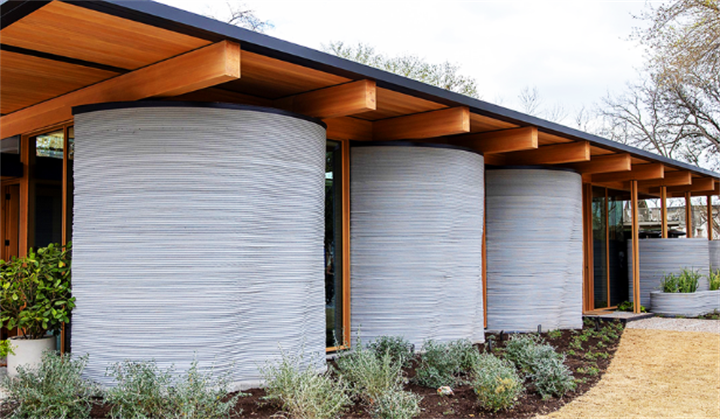
The Kisawa resort in Mozambique, meanwhile, offers another direction. The entire resort, from buildings to interior objects, was made using 3D printing, its organic forms blending with the natural landscape to become a landmark in the high-end travel market.
This type of practice doesn't aim to be "cheaper than conventional construction"; it pursues aesthetic and spatial values that only 3D printing can deliver. It hints at a possibility: 3D-printed buildings may not need to compete head-to-head with traditional methods on every dimension as they search for their unique niche.
Finding Its Own Role
Pulling all this together, a cautious judgment emerges: for the foreseeable future, 3D-printed construction is more likely to embed itself in the building industry as a "special forces" unit rather than roll out as regular infantry that replaces existing systems.
Its comparative advantage does not lie in going head-to-head with brick-and-mortar or timber-frame systems on the unit cost of ordinary housing—a battlefield where those older systems have been deeply optimized, making direct confrontation often unwise.
A view that has been gaining ground in industry analysis is that the real potential of 3D-printed construction probably lies more in areas where traditional techniques are impractical or not cost-effective: complex freeform components, temporary shelters that need rapid deployment after a disaster, locations with extremely high labor costs or scarce skilled workers, and construction scenarios beyond Earth.
When the technology stops being expected to be the universal best solution across all dimensions, and instead focuses on tasks where it can genuinely offer unique value, its development path may become clearer.
Until that point, every attention-grabbing 3D-printed building around the world is essentially a data point in the same long technological experiment. Architecture, at its core, is a discipline that merges physical laws, institutional systems, economic logic, and human dwelling habits—it is never determined solely by innovations in how materials are stacked together.
References
[1] PERI 3D Construction & Plurial Novilia. ViliaSprint² Project Documentation and Cost Comparison Report. April 2026.
[2] Holcim Ltd. TectorPrint: Concrete-Grade 3D Printing Materials for Sustainable Construction. Technical Brief, 2026.
[3] COBOD International. BOD2 Gantry Printer: Technical Specifications and Project Case Studies. 2025.
[4] Milan Bergamo Airport (SACBO). Press Release: Inauguration of the Orcasel 3D-Printed Service Building. 2026.
[5] Icon Build. House Zero and Community-Focused 3D-Printed Housing Initiatives.Project Portfolio, 2025.
About the Author
Daniel Brooks covers the intersection of technology, business, and industrial transformation. His reporting focuses on robotics, advanced manufacturing, cloud computing, and emerging technology markets. He aims to provide clear, evidence-based analysis of how technological innovation is reshaping industries worldwide.
Editor's Note
This article examines the gap between the promise of 3D-printed housing and its limited real-world adoption. Rather than treating the technology in isolation, the analysis considers the interplay of structural engineering constraints, building codes, insurance frameworks, supply chain realities, and market dynamics. The aim is to offer readers a grounded, evidence-based perspective on why a seemingly transformative innovation remains largely confined to demonstration projects and niche applications—and what would need to change for that to shift. All examples and data points are drawn from publicly available project reports, industry documentation, and professional commentary as of mid-2026.
Recommend:

How Should the World Choose Fourth-Generation Nuclear Power?

Starship V3’s Global Reverberations:How Low-Cost Access to Orbit Is Redrawing the Space Industry Map

The AI Chip R&D Boom: Why OpenAI, Microsoft, and Meta Are All Entering the Chip Industry
Why Aren't 3D-Printed Homes Everywhere, Despite Lower Costs Than Brick-and-Mortar?