
May 11, 2026, 10:34 a.m. ET | ⏱️13–14minutes
By Ethan Carter
By 2026, the AI chip market has moved from preparation into large-scale commercial deployment, according to multiple market research firms. The rapid expansion of AI computing demand — from hyperscale data centers to edge devices — is reshaping the entire semiconductor industry.
Yet beneath the headlines about GPU performance and advanced manufacturing nodes, a more complicated reality is emerging. Critical supply-chain components are becoming bottlenecks, engineering trade-offs are growing more difficult, and downstream demand is evolving from experimental investment into long-term infrastructure spending.
This article examines the AI chip boom from three perspectives:
· the tightening supply of ABF substrates,
· the real-world engineering challenges of AI chip selection,
· and the evidence supporting sustained AI infrastructure demand.
ABF Substrates: The Hidden Bottleneck in Advanced Packaging
Why ABF Substrates Matter
When people discuss AI chips, attention usually focuses on processing power, transistor density, or fabrication nodes. But one of the most critical components sits underneath the chip itself: the packaging substrate.
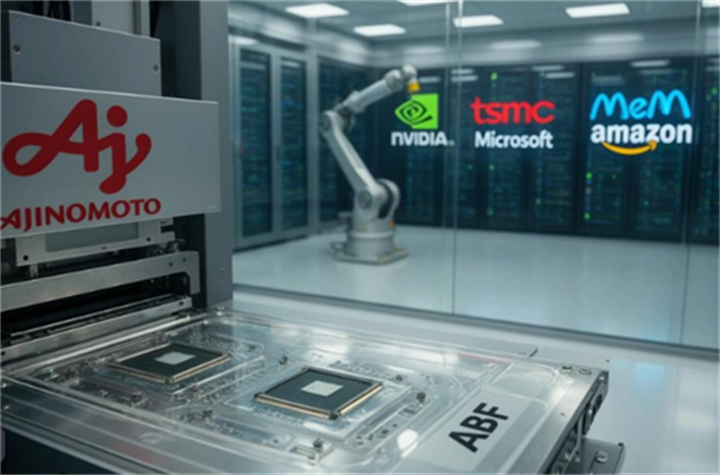
ABF (Ajinomoto Build-up Film) substrates are now widely used in high-performance CPUs, GPUs, networking chips, and AI accelerators. These substrates provide the electrical and mechanical foundation connecting the chip package to the motherboard.
According to multiple semiconductor industry reports, the ABF material itself was developed by Japan’s Ajinomoto, which has maintained an estimated global market share above 95% for years.
Compared with traditional BT substrates, ABF substrates offer:
· finer circuit routing,
· lower dielectric loss,
· higher insulation performance,
· and greater interconnect density.
These characteristics are increasingly necessary as AI chips push higher bandwidth, higher power delivery, and larger package sizes.
In practical terms, ABF substrates function as a high-speed bridge between the processor and the rest of the system. Without them, many modern AI accelerators would struggle to maintain signal integrity at current performance levels.

Why AI Is Driving Explosive ABF Demand
Generative AI is dramatically increasing substrate complexity.
According to supply-chain reports and a May 2026 report from Wccftech, high-end AI GPUs and ASICs require substantially larger substrate areas and more routing layers than conventional CPUs.
Industry estimates suggest:
· AI accelerators may consume five to ten times more ABF material per chip,
· while larger package sizes reduce total output per production line.
This creates a double pressure on supply:
1. more material consumption per chip,
2. fewer finished substrates produced from the same manufacturing capacity.
As a result, ABF substrates have become one of the tightest supply constraints in advanced semiconductor packaging.
Rising Prices and Ongoing Supply Constraints
The market has already begun responding.
Industry data indicates that beginning in Q2 2026:
· average ABF substrate pricing increased roughly 5%–10%,
· while some spot-market pricing reportedly surged by over 30%.
The same Wccftech report also referenced market speculation that Ajinomoto could raise ABF film pricing by at least 30%.
Most industry observers do not expect the shortage to disappear quickly.
Different estimates vary, but several reports suggest supply-demand imbalance may continue until at least late 2027, with some Taiwanese supply-chain sources forecasting continued tightness into 2028.
Naturally, these forecasts depend heavily on whether AI infrastructure spending remains strong. If enterprise AI adoption slows significantly, the pressure could ease faster than expected.
Still, the broader implication is important:
AI competition is no longer determined solely by chip architecture. Increasingly, upstream materials and packaging capacity are becoming strategic constraints.
Why Suppliers Could Benefit Financially
Several financial analysts have pointed out that tight supply conditions may actually improve profitability for parts of the upstream ecosystem.
A Morgan Stanley report suggested that ABF suppliers may be able to pass most raw-material cost increases downstream in a strong AI demand environment.
This resembles earlier cycles in the memory industry, where rising wafer costs ultimately improved profitability for certain midstream suppliers.
The result is a broader structural shift:
AI competition is extending beyond compute performance into every critical layer of the semiconductor supply chain.

Choosing an AI Chip: Engineering Trade-offs Beyond TOPS
Why Peak TOPS Alone Can Be Misleading
For developers building AI products, selecting the right chip has become increasingly complicated.
Modern AI processors range from roughly 5 TOPS to more than 1,000 TOPS, with major differences in:
· power efficiency,
· thermal behavior,
· software ecosystems,
· cost structure,
· and deployment flexibility.
In theory, higher TOPS numbers imply stronger performance.
In practice, engineering teams frequently discover that peak computing performance is far less important than overall system efficiency.
Real-world utilization rates often fall between 30% and 50% because of limitations involving:
· memory bandwidth,
· memory capacity,
· data movement,
· and software optimization.
As a result, simply chasing the highest benchmark numbers can easily produce inefficient or overpriced systems.
Five Broad AI Chip Performance Tiers
Although market definitions vary, AI chips can generally be grouped into several broad categories.
Entry-Level AI Chips (5–10 TOPS)
These chips target lightweight consumer workloads such as:
· keyword spotting,
· simple voice commands,
· and low-cost smart devices.
Cost efficiency is usually the top priority.
Basic AI Chips (10–50 TOPS)
This segment supports:
· voice interaction,
· basic computer vision,
· and entry-level edge AI applications.
Many consumer smart cameras fall into this category.
Advanced AI Chips (50–200 TOPS)
This range is increasingly viewed as the current cost-performance sweet spot.
These processors can often run:
· YOLOv8,
· ResNet,
· and medium-sized multimodal inference workloads.
They are widely used in:
· edge AI servers,
· robotics,
· industrial gateways,
· and smart retail systems.
Professional AI Chips (200–500 TOPS)
This tier targets more demanding workloads such as:
· robot SLAM,
· complex visual understanding,
· and advanced industrial automation.
At this stage, thermal design and power delivery become substantially more complicated.
Proof-of-concept testing is usually recommended before large-scale deployment.
Industrial AI Systems (500+ TOPS)
These platforms target:
· autonomous driving,
· multi-camera sensor fusion,
· and large industrial AI systems.
System costs can easily reach thousands or tens of thousands of dollars once cooling, certifications, and infrastructure are included.
Four Factors That Matter More Than Marketing Specs
Experienced engineering teams increasingly evaluate AI chips across four dimensions.
Performance
TOPS alone is insufficient.
Developers also need to evaluate:
· memory capacity,
· memory bandwidth,
· model compatibility,
· and future scalability.
Large quantized AI models often require 4–8 GB of memory minimum.
Many teams also reserve roughly 20%–30% compute headroom for future updates.
Power Efficiency and Thermal Constraints
For edge AI devices, power efficiency is critical.
Passive cooling is often feasible below roughly 15 W TDP.
Above that threshold, active cooling frequently becomes necessary.
This directly affects:
· device size,
· battery life,
· reliability,
· and manufacturing complexity.
Total Cost of Ownership
The chip itself is only one part of total cost.
Additional expenses include:
· software development,
· cooling systems,
· peripheral hardware,
· certifications,
· and engineering labor.
In many projects, attempting to minimize chip cost alone ultimately increases overall system expense.
Ecosystem and Toolchain Maturity
This may be the most underestimated factor.
Toolchain quality, documentation, developer support, and software ecosystem maturity often determine whether a project succeeds on schedule.
Poor software support can delay deployment for months.
This is why many engineering teams follow a practical rule:
ecosystem matters more than performance, and performance matters more than raw chip pricing.
Different Companies Compete With Different Strengths
The AI chip landscape has become highly fragmented.
NVIDIA
NVIDIA remains dominant in high-end AI acceleration thanks largely to:
· CUDA,
· mature AI frameworks,
· and broad developer adoption.
Its ecosystem advantage remains difficult to replicate.
Qualcomm
Qualcomm performs strongly in:
· low-power inference,
· integrated connectivity,
· and mobile AI deployment.
This makes it highly competitive for:
· smart cameras,
· consumer AI devices,
· and edge computing.
Chinese AI Chip Vendors
Companies such as Horizon Robotics and Cambricon are expanding rapidly in:
· autonomous driving,
· domestic AI infrastructure,
· and localized industrial deployment.
These firms are increasingly important in China’s semiconductor ecosystem.
MediaTek and Rockchip
These companies compete aggressively in:
· consumer AIoT,
· low-cost edge AI,
· and multimedia processing.
Their main advantage is cost efficiency.

Real Demand: AI Spending Is Becoming Infrastructure Investment
AMD’s Results Reflect Strong AI Momentum
First-quarter 2026 earnings provided additional evidence that AI demand remains robust.
On May 5, 2026, AMD reported quarterly revenue of approximately $10.3 billion, exceeding many analyst expectations.
Its data-center business generated roughly $5.8 billion in revenue, representing approximately 57% year-over-year growth.
Data-center operations now account for more than half of AMD’s total revenue.
CEO Lisa Su also stated that customer engagement for next-generation AI products remains stronger than originally expected.
AI Server Demand Also Remains Strong
AI server supplier Super Micro reported similarly strong signals.
According to a May 2026 report from MoneyDJ, the company’s revenue guidance exceeded analyst expectations substantially.
Its stock price surged more than 18% in after-hours trading following the announcement.
This suggests that enterprise AI infrastructure spending remains active despite broader market volatility.
The Industry Is Shifting From Training to Inference
One of the most important structural shifts is the transition from AI training toward inference deployment.
Training large models requires enormous compute clusters.
But inference workloads may ultimately consume even larger aggregate computing resources because inference happens continuously across:
· cloud services,
· enterprise systems,
· mobile devices,
· and edge hardware.
As AI adoption expands beyond major technology firms, inference demand could become the dominant long-term driver of semiconductor growth.
Why This Matters for the Entire Supply Chain
This shift changes the nature of AI investment.
Earlier phases of AI spending were heavily concentrated among a few hyperscale technology companies.
Increasingly, AI deployment is becoming infrastructure spending across multiple industries including:
· healthcare,
· manufacturing,
· logistics,
· automotive,
· finance,
· and consumer electronics.
That broader deployment base may make AI demand structurally more durable than earlier technology cycles.
However, supply-chain bottlenecks — particularly in packaging materials like ABF substrates — could continue introducing volatility into pricing and delivery timelines.
Conclusion
The AI chip race is no longer defined by benchmark numbers alone.
It has evolved into a system-level competition spanning:
· materials,
· packaging,
· chip architecture,
· software ecosystems,
· manufacturing capacity,
· and deployment efficiency.
The shortage of ABF substrates highlights how even relatively overlooked upstream materials can become strategic constraints.
At the same time, real-world engineering experience increasingly shows that successful AI deployment depends on balancing:
· performance,
· power efficiency,
· ecosystem maturity,
· and long-term operational cost.
Meanwhile, strong downstream earnings suggest that AI infrastructure spending remains grounded in genuine commercial demand rather than pure speculation.
For investors, developers, and industry observers alike, understanding these deeper structural dynamics may ultimately prove more valuable than focusing solely on headline benchmark numbers or short-term market hype.
References
1. Wccftech — AI Packaging and ABF Supply Chain Reports (2026)
2. Morgan Stanley Semiconductor Industry Analysis (2026)
3. AMD Q1 2026 Earnings Report and Earnings Call Transcript
4. MoneyDJ — Super Micro Revenue Guidance Report (May 2026)
5. FactSet and Citadel Securities Q1 2026 Earnings Statistics
About the Author
Ethan Carter focuses on AI chips, semiconductor technology, and computing infrastructure. His work covers GPUs, AI accelerators, edge AI processors, and the hardware systems that power modern artificial intelligence. He writes analytical articles that connect technical developments with industry trends and practical applications.
Disclaimer
All data in this article has been checked against publicly available information and authoritative sources. The content is for informational and discussion purposes only and does not constitute investment advice. Companies and stocks mentioned are solely referenced as part of industry analysis and should not be interpreted as investment recommendations. Semiconductor markets remain highly cyclical and subject to rapid technological and macroeconomic changes. Please conduct independent research before making financial or business decisions.
Recommend:

Huawei’s “Tao Law” Could Reshape How Future Chips Are Designed

Next-Gen AI Finally Understands the Physical World – A 'Silent Tsunami' Reshaping Autonomous Driving, Architecture, and Gaming

China Approves 6G Trial Spectrum: What the 6425–7125 MHz Band Means

When the Brain Connects to Machines: What Brain-Computer Interfaces Can and Can’t Do Right Now