
May 24, 2026, 10:11 a.m. ET | ⏱️7–9 minutes
By Olivia Bennett

On May 26, 2026, China’s Ministry of Industry and Information Technology (MIIT) officially approved a 6G trial spectrum license.
The approved band is 6425–7125 MHz, offering a continuous bandwidth of 700 MHz.
The trials are led by the IMT-2030 (6G) Promotion Group, with participation from all four major Chinese operators: China Telecom, China Mobile, China Unicom, and China Broadnet.
The trial period runs from 2026 to 2027.
It focuses on field testing of network architecture, integrated sensing and communication, low-altitude connectivity, and satellite networking.
This marks a shift from lab simulations and prototype testing to large-scale field verification in real-world environments.
Why the Golden Mid-Band Matters
The 6425–7125 MHz band is widely seen by the telecom industry as the “golden mid-band.”
According to the Radio Administration of MIIT, this band combines wide coverage, high capacity, and high reliability. It is also highly compatible with the existing 5G mid-band ecosystem.
(Note: The idea that this compatibility could allow reuse of mature RF components, antennas, and chip supply chains—thereby lowering network deployment costs—is a reasonable extension of that statement. No independent study has directly confirmed this specific claim.)
A Global Divide on 6 GHz
Countries have taken different paths on the 6 GHz band.
The United States: According to an FCC report and order in 2020, the U.S. opened the entire 5925–7125 MHz band for unlicensed use, such as Wi-Fi 6E/7. In March 2026, the Securities Times reported that Qualcomm and nearly 60 companies formed a “6G Development Alliance,” aiming to deploy 6G globally from 2029. A White House memorandum from December 2025 also directed federal systems to vacate the 7.125–7.4 GHz band for commercial 6G.
The European Union: The Securities Times reported on May 9, 2026, that the EU has invested 900 million euros through the Smart Networks and Services Joint Undertaking (SNS JU).
South Korea: TS2 Space reported that South Korea’s “K-Network 2030” strategy proposes launching 6G commercial services as early as 2028, with around 625 billion won allocated to 6G R&D.
Japan: According to Japan’s Ministry of Economy, Trade and Industry (METI), the government set up a “Beyond 5G (6G) Promotion Fund.” In 2025, NICT announced an investment of about 5.54 billion yen to support 6G research.
(All investment figures above come from the cited sources. Actual amounts may vary depending on the time frame and accounting method.)
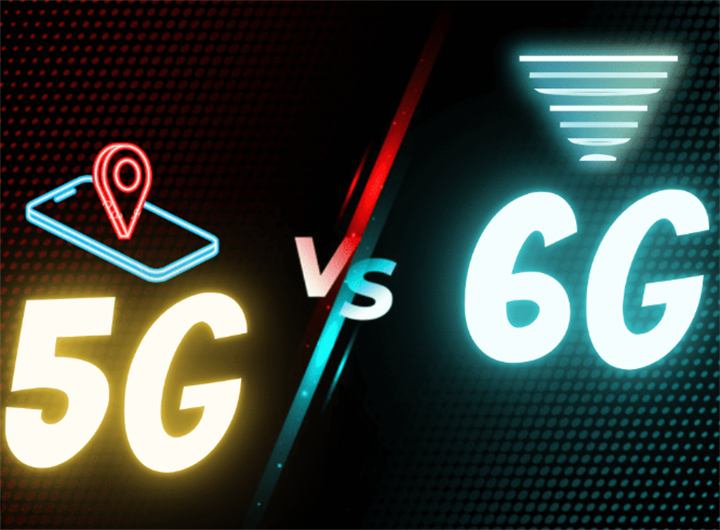
6G vs. 5G: A Leap in Capabilities
The 6G targets below draw on the “6G Overall Whitepaper” released under MIIT guidance and on the ITU’s “IMT-2030 Radio Interface Technology Performance Requirements” (February 2026). These represent an early industry consensus. The 5G values come from the ITU’s IMT-2020 requirements.
Key performance indicators:
l Peak data rate: 5G ~10 Gbps → 6G 50–200 Gbps (practical target; theoretical peak up to 1 Tbps), a 5–20× improvement.
l User experienced data rate: 5G 0.1–1 Gbps → 6G 300–500 Mbps, a 3–5× improvement.
l Latency: 5G 1–10 ms → 6G 0.1–1 ms, about a 10× reduction.
l Connection density: 5G 1 million devices/km² → 6G 100 million devices/km², a 100× increase.
l Reliability: 5G 99.999% → 6G 99.99999%, a full order of magnitude higher.
l Positioning accuracy: 5G meter/sub-meter level → 6G centimeter level.
l Energy efficiency: 6G targets a more than 90% reduction compared to 5G, a greater than 7× improvement.
(Note: Because the metrics are drawn from different standard documents and test conditions, the improvement ratios serve as references. Actual performance will vary with deployment environments.)
6G will extend into higher frequency bands and natively integrate AI, becoming a “native AI” technology. The same ITU report indicates that 6G networks will natively support integrated sensing and communication, and AI-native capabilities.
The Coverage Trade-Off
Higher frequencies come with physical constraints.
The industry generally expects the coverage radius for 6 GHz and above to be only about 100 meters—far less than the several-kilometer range of 4G base stations.
This suggests 6G will be deployed in ultra-dense formations in high-value areas like dense urban zones, factories, and venues. It will coexist with 4G, 5G, and satellite networks to form a layered, heterogeneous network.

What’s Already Being Tested
Several application scenarios are already in early field verification.
Drone delivery: In April 2025, Science and Technology Daily reported that Purple Mountain Laboratories in Nanjing completed a drone medicine delivery trial using 6G cell-free technology. The drone flew 7.4 km across an urban area in 13 minutes, achieving 2–3 times the efficiency of manual delivery.
Holographic communication: DIGITIMES reported on September 8, 2025, that China Mobile Hong Kong and the China Mobile Research Institute completed the world’s first cross-border 6G test between Beijing and Hong Kong, demonstrating real-time glasses-free 3D communication.
Industrial control: People’s Daily reported on April 11, 2025, that Purple Mountain Laboratories demonstrated wirelessly controlled ping-pong ball motion with 6G. The steady, rhythmic movement showcased the deterministic latency and high reliability of 6G in industrial scenarios.
What’s Further Out
Longer-term applications such as remote surgery, cooperative autonomous driving, and embodied intelligent robots currently have no large-scale commercial cases.
These remain in the research and proof-of-concept stages. Actual deployment timelines are highly uncertain.
The Road to 2030 and Beyond
The MIIT’s 6G timeline, as reported by Securities Times on May 9, 2026:
l 2022–2025: Phase 1 key technology trials completed, with over 300 technology reserves accumulated.
l 2026: Phase 2 technical solution trials begin; 6 GHz test spectrum officially approved.
l 2026–2027: Field testing on network architecture, integrated sensing and communication, low-altitude connectivity, and satellite networking.
l ~2028–2029: First version of the 6G international standard expected to be finalized.
l Around 2030: Commercial launch of 6G.
l 2035: Large-scale deployment, supporting an industry and application market worth trillions of yuan.
Academician You Xiaohu of the Chinese Academy of Sciences has noted that the 6G roadmap and technical framework are relatively clear. The first version of the standard is expected within about two years, with commercial products likely one to two years after that.
The spectrum license is a crucial step in moving 6G from vision to reality. With the four major operators now engaged in field testing, technology verification is accelerating. The coming years will be a critical window as 6G moves from standards to industry, and from trials to commercial deployment.
References
[1] International Telecommunication Union. (2026, February). IMT-2030 Radio Interface Technology Performance Requirements. ITU-R.
[2] Federal Communications Commission. (2020). Unlicensed Use of the 6 GHz Band. Report and Order, FCC 20-51.
[3] The White House. (2025, December 19). Memorandum on Winning the 6G Race.
[4] Ministry of Industry and Information Technology of China. (2026, May 26). Approval of 6G Trial Frequency Usage for IMT-2030 (6G) Promotion Group. (As reported by multiple official Chinese media outlets, including People’s Daily Online and Securities Times.)
[5] Securities Times. (2026, May 9). China approves 6G trial frequency, marking key step toward commercialization.
About the Author
Olivia Bennett specializes in emerging technologies, including artificial intelligence, robotics, space technology, and biotechnology. Drawing on industry research and public data, she explores the technological, commercial, and societal implications of major innovations, with an emphasis on balanced and accessible analysis.
Editor’s Note
This article draws on official announcements, international standards documents, and reports from established media outlets as of late May 2026. The 6G performance targets cited are based on early consensus within the International Telecommunication Union and may be refined as standardization advances. Investment figures and policy directions reflect publicly available information at the time of writing and are subject to change. The inclusion of specific trials and demonstrations is intended to illustrate the current state of technology verification; they do not constitute endorsements of commercial readiness. All forward-looking statements regarding deployment timelines and application scenarios carry inherent uncertainty and should be understood as projections rather than guarantees.
Recommend:

Humanoid Robots: What’s Hype, What’s Real, and What’s Still Unknown
The Battle for On-Device AI Chips: Qualcomm, Apple, and MediaTek – Who Will Dominate?

From Pattern Recognition to World Simulation: How the SIMI System Builds “Physical Common Sense” for AI

Going Unmanned Isn’t About Removing Pilots—It’s About Rebuilding Flight Capability: AI and 5G-A Transform Low-Altitude Aviation