
May 29, 2026, 14:36 p.m. ET | ⏱️10–13 minutes
By Olivia Bennett
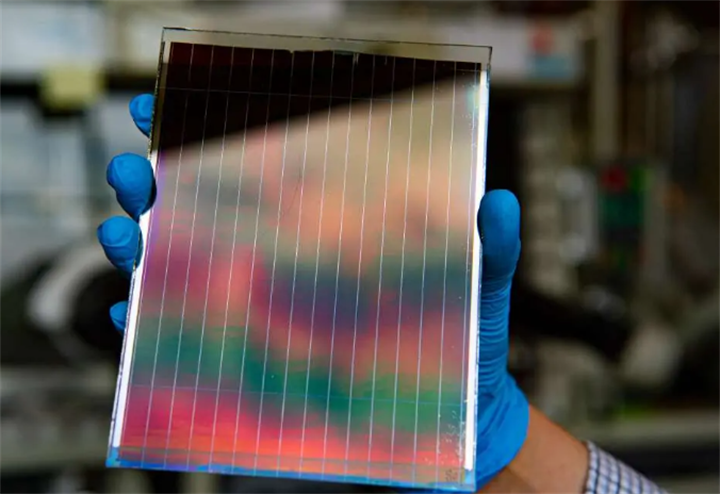
Perovskite solar cells are a new kind of solar technology. They have gotten very efficient very fast — faster than traditional silicon cells ever did. But there is a catch: no one knows for sure if they can last 25 years outside in the sun, rain, and heat.
1. The Efficiency Story — Impressive, But Not the Whole Story
In 2009, a Japanese research team made the first perovskite solar cell. Its efficiency was only 3.8%. That was nothing special. But since then, efficiency has climbed like almost no other solar technology in history.
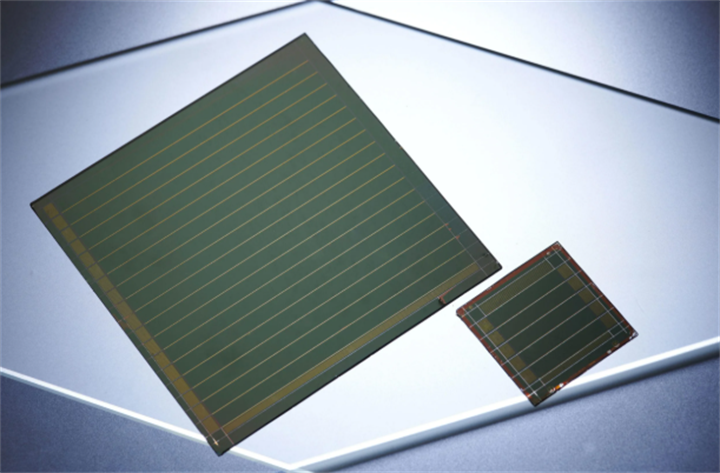
According to the U.S. National Renewable Energy Laboratory (NREL), a perovskite-silicon tandem cell made by LONGi (China) reached a certified efficiency of 34.85% as of April 2025. That is higher than the theoretical limit of a single silicon cell (about 33.7%). Single-junction perovskite cells have also broken records — a team from Soochow University and the University of New South Wales reported 27.3% on a small lab cell.
These numbers are real. They come from independent labs. But here is the question that matters more than the numbers: Can a 34%-efficient cell still work well after 10 years of real weather? After 20? After 25?
We don't know. And that is the real challenge.
2. What Makes Perovskite Different (and Exciting)
Before we talk about the problems, let's be clear why people are excited.
Perovskite is not a single material. It is a whole family of materials with the same crystal structure (ABX₃). That structure has some useful properties:
It absorbs light very strongly. A layer just a few hundred nanometers thick — about 1/100th of a human hair — can capture most sunlight.
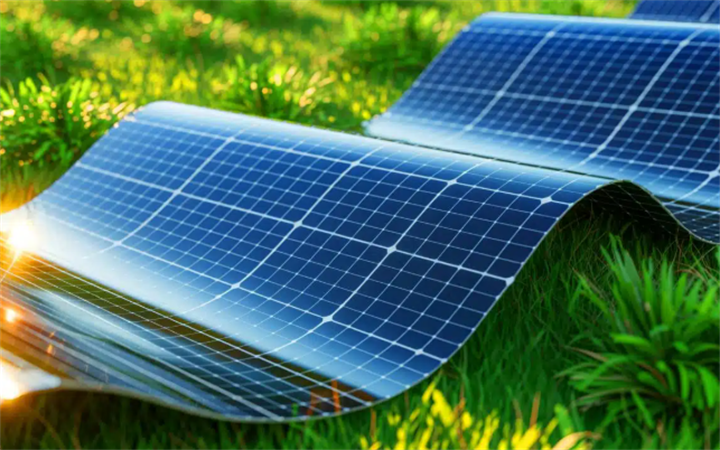
It can be flexible. You can spray or print perovskite onto glass, plastic, or metal. The resulting cell can be bent, folded, or shaped.
It costs less energy to make. Silicon cells require high-temperature processing. Perovskite can be made at lower temperatures, which could cut manufacturing costs.
It works well in low light. Studies show perovskite cells keep working better than silicon in cloudy, shady, or indoor light.
These are real advantages. But they are mostly proven in labs or short-term tests. The big unknown is long-term outdoor stability.
3. The 25-Year Standard — Why It Matters Everywhere
Here is a simple fact of the solar industry: if a solar panel cannot last 25 years, it is very hard to sell for large power plants.
Why? Because banks and insurance companies have built their models around 25 years. A typical silicon panel comes with a 25- to 30-year warranty. It degrades about 0.4% to 0.6% per year. Lenders trust that.
Perovskite does not have that track record yet. Not even close.
The longest outdoor study published so far comes from Germany's Helmholtz-Zentrum Berlin (HZB). It followed perovskite cells for about 4 years. The results were mixed: in winter, the cells performed about 30% worse than in summer, and the seasonal gap grew larger as the cells aged.
Another notable study came from a team at Nanjing University of Aeronautics and Astronautics. In 2025, they published a paper in Science showing that a perovskite module (30 cm x 30 cm) could last about 6.7 equivalent years under accelerated cycling tests. That is one of the best results published for an industrial-sized module. But 6.7 years is still far from 25.
Oxford PV, a UK-based company, already offers a 25-year warranty on its commercial modules. But that warranty is based on accelerated lab tests, not on 25 years of actual use. That is a big difference. A warranty is a business promise. Physical lifetime is a different thing.
4. Why Perovskite Degrades — It's Not Like Silicon
Perovskite breaks down in ways that silicon does not. Researchers around the world have identified several key mechanisms:
Ion migration
Some ions in the perovskite crystal (like iodide and organic cations) move around under light and electric fields. This movement damages the material over time. The Nanjing team identified this as a main cause of long-term failure.
Heat and humidity together
Perovskite does not like moisture or high heat. Some products have passed the standard "damp heat" test (85°C / 85% humidity). But real-world studies in Spain (hot and humid) versus Poland (mild) suggest that the same cell degrades faster in hotter, wetter climates. That means one design may not fit all climates.
UV light
Natural sunlight contains UV radiation. Lab LED lights usually do not. UV can weaken the bonds between layers in a perovskite cell. This means lab tests may overestimate real-world lifetime.
Temperature cycling
In tandem cells (perovskite on top of silicon), the two materials expand and contract at different rates when temperature changes. Over thousands of day-night cycles, this creates stress and eventually damage. The HZB winter data probably reflects this.
These mechanisms are real and well documented. They are not speculation. What is not yet known is how fast they actually cause failure in different real-world environments.

5. The Testing Problem — Lab Results Don't Always Match Reality
The solar industry has standard tests for reliability. They are called IEC 61215 and IEC 61730. They work well for silicon.
But they were not designed for perovskite. For example, they do not test for ion migration. And they assume that speeding up time by raising temperature does not change the way the material fails. That assumption may be wrong for perovskite.
In 2020, a group of 51 research institutions published a consensus statement in Nature Energy. They proposed a new set of guidelines called ISOS to better test perovskite stability. But the industry has not fully adopted them yet.
So when you see a headline saying "Perovskite cell lasts 10,000 hours", you have to ask: under what conditions? In nitrogen? Under constant light? Without UV? Without day-night cycles? The answers change how you should interpret the number.
A simple rule: Do not directly convert lab hours into outdoor years. The physics is not that simple.
6. What Is Being Done to Fix Stability?
The good news is that researchers and companies are working hard on solutions. Here are the main approaches.
Better encapsulation
This means sealing the cell to keep out moisture and oxygen. The Nanjing team used multi-layer encapsulation to reach their 6.7-year result. But encapsulation does not stop internal degradation like ion migration.
Changing the material itself
3D/2D layered structure: A thin 2D layer on top of a 3D perovskite can block moisture and slow ion movement.
Adding different ions: Mixing in cesium or formamidinium makes the crystal more stable.
Surface treatment: The Nanjing team's "gas-phase assisted surface reconstruction" turned the surface into a more stable form.
So far, however, the huge efficiency gains (from 26% to 34%) have not brought similar gains in stability. That suggests that improving stability may need different research strategies, not just more of the same.
Scaling up manufacturing
Small lab cells (under 1 cm²) are easy to make efficient. Large modules (hundreds or thousands of cm²) are much harder. The coating becomes uneven. Electrical resistance increases. Many labs use spin-coating, which is not suitable for factories.
Better methods like blade coating, slot-die coating, and roll-to-roll printing are being developed. Several equipment suppliers in Europe, China, and the US offer them. But the gap between lab and factory remains large.
Lead-free alternatives
Most high-efficiency perovskites contain lead. That is a problem for environmental regulations like the EU RoHS directive. Tin-based alternatives exist, but they are about 5-8 percentage points less efficient and even less stable. No one has yet found a non-lead perovskite that matches lead-based performance.
7. Where Can We Use Perovskite Today? (Realistic 2026 View)
Given the current state of stability, perovskite is not ready for everything. But it is ready for some things.
Building-integrated photovoltaics (BIPV)
Perovskite can be made semi-transparent and in different colors. It can be printed onto glass or metal panels for building facades, roofs, or windows. In this market, aesthetics matter more than 25-year warranties. European and Japanese demonstration projects are already running.
Weight-limited roofs
Some roofs cannot hold heavy silicon panels. Perovskite's light weight is a real advantage. A few residential projects in Germany and the US are testing this.
Electric vehicles
Oxford PV is part of the UK's SUITE project, looking at putting perovskite cells on EV roofs. This is still early-stage. But the idea is to add range without adding weight.
Space and high-altitude applications
China's Shenzhou-23 mission, NASA experiments, and ESA tests all show that perovskite works in space. For satellites and space stations, saving weight saves launch cost. That matters more than 25-year life.
What about large solar farms?
Not yet. Utility-scale projects require bankable 25-year data. Perovskite does not have that. Most analysts expect the large-scale market to open up only after 2030, if at all.
8. A Practical Guide for Anyone Following This Technology
If you are not a scientist or investor, here is how to think about perovskite claims.
When you see a stability claim, ask four questions:
Was the test done in air or nitrogen? (Air is more realistic.)
Did the light source include UV? (Real sunlight has UV.)
Was it constant light or on-off cycles? (Real days have night.)
What efficiency drop are they measuring? T80 (80% remaining) is much different from T90 (90% remaining).
When a company offers a long warranty, ask:
Is it backed by an independent third party like TÜV or Fraunhofer ISE?
Do they have any real outdoor data — not just lab data?
A realistic timeline (not advice, just an estimate):
2026-2027: Small-scale adoption in BIPV and specialized applications. Good for early adopters who accept risk.
2027-2029: If GW-scale production lines run well and 2-3 years of outdoor data look good, confidence will grow.
2030+: With 5+ years of real data, perovskite might start competing in mainstream markets.
Conclusion: Efficiency Gets You In, Lifetime Keeps You There
Perovskite solar cells have made remarkable progress. From 3.8% to nearly 35% in about 15 years — that is real. It is not hype.
But the industry is still waiting for proof that these cells can last. The 25-year problem is not just a technical one. It is a problem of evidence. Without long-term outdoor data, accelerated lab tests can only tell part of the story.
The good news is that progress is happening. HZB has 4 years of outdoor data. The Nanjing team has shown 6.7 equivalent years. Companies like Oxford PV, GCL, and others are building real factories. These are steps in the right direction.
The smart view — for researchers, developers, and potential users — is this: Watch the data. Be patient. Let the early adopters take the risk and generate the evidence. And don't assume that what works in a lab for 10,000 hours will work outside for 25 years. Not yet.
References
[1] National Renewable Energy Laboratory (NREL). (2026). Best Research-Cell Efficiency Chart.
[2] Green, M. A., et al. (2024). Solar cell efficiency tables (Version 64). Progress in Photovoltaics, 32(7), 425-441.
[3] Khenkin, M. V., et al. (2020). Consensus statement for stability assessment and reporting for perovskite photovoltaics based on ISOS procedures. Nature Energy, 5, 35-49.
[4] Zhao, X., Guo, W., et al. (2025). Gas-phase assisted surface reconstruction for enhanced outdoor stability of perovskite solar modules. Science, DOI: 10.1126/science.adv428.
[5] Unger, E., et al. (2025). Seasonality in Perovskite Solar Cells: Insights from 4 Years of Outdoor Data. Helmholtz-Zentrum Berlin.
About the Author
Olivia Bennett specializes in emerging technologies, including artificial intelligence, robotics, space technology, and biotechnology. Drawing on industry research and public data, she explores the technological, commercial, and societal implications of major innovations, with an emphasis on balanced and accessible analysis.
Editorial Note:
This article summarizes publicly available research and industry reports as of 2026. Perovskite solar technology is developing rapidly, and commercial performance claims may change as more long-term outdoor data becomes available. The discussion here is intended for educational purposes and should not be considered investment or engineering advice.
Recommend:
Starship V3’s Global Reverberations:How Low-Cost Access to Orbit Is Redrawing the Space Industry Map
The 2026 AI Chip Landscape: How Long Can NVIDIA’s Solo Performance Last?

How Huawei's Pangu-Weather AI Model Goes Beyond "Physical Laws" and Reshapes the Future of Global Weather Forecasting

China Approves 6G Trial Spectrum: What the 6425–7125 MHz Band Means