May 28, 2026, 10:19 a.m. ET | ⏱️14–16 minutes
By Olivia Bennett
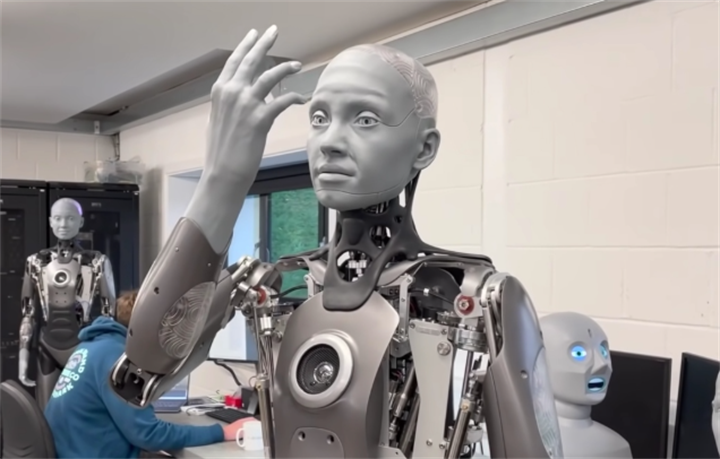
In the first half of 2026, humanoid robots have grabbed headlines around the world. Videos of robots dancing, doing backflips, and working in pilot factory projects keep going viral on social media. Some investment bank reports even compare their growth trajectory to the early days of the electric vehicle industry.
Yet behind the excitement, a nagging question persists: how much of this enthusiasm reflects real technological progress, and how much relies on a compelling business story?
Drawing on publicly available reports, industry data, and shared experiences from practitioners on the front lines, this article takes a balanced look at three areas: the technology itself, the logic of product design, and the actual state of industry progress.
1. The Technology: Impressive Demos and a Difficult “Generalization” Gap
A question many people ask is this:
Why can a robot perform a complex dance on stage but struggle to pour a glass of water or tidy a desk—tasks that seem much simpler?
The answer points to a key concept in robot learning: generalization.
In simple terms, generalization means a robot can take a skill learned in one situation and apply it successfully in a new environment it has never seen before.
Today, most humanoid robots learn through imitation learning or reinforcement learning. These methods usually train robots in highly controlled environments for specific tasks.
For example, if a robot only practices grabbing an apple on a clean kitchen counter, performance may drop sharply when the lighting changes, the counter becomes cluttered, or the apple is placed differently.
Technically, this is known as overfitting. The model performs well in familiar situations but struggles with variations outside its training data.
Even leading models have not fully solved this issue.
According to a 2023 paper from Google DeepMind, the RT-2 vision-language-action model showed stronger generalization than the earlier RT-1 model in controlled laboratory settings.
However, there is still no publicly available independent evidence showing RT-2 can consistently achieve commercial-grade reliability in fully open real-world environments.
Many researchers therefore view the technology as remaining largely in the experimental stage.
Another important limitation is that mobility and object manipulation still mostly rely on separate technical systems.
Walking and balance use one control stack, while delicate object handling depends on another. Integrating the two smoothly remains difficult.
Researchers in the robotics community have also pointed out unresolved problems involving:
· Smooth transitions across long action sequences
· High-fidelity simulation of soft objects
· Stable operation in unpredictable environments
As a result, a polished robot dance video mainly demonstrates progress in motion generation and balance control. It does not necessarily mean artificial general intelligence is close.
2. Product Design: Is the Human Form an Engineering Solution or a Business Narrative?
Alongside the technical bottlenecks lies a more fundamental question:
If the goal is simply to get work done, does a robot really need to look like a human?
Consider a simple example involving three household tasks:
· Washing dishes
· Sweeping floors
· Cleaning windows
Today, there are roughly three possible approaches.
Option A: Specialized Appliances
Use separate devices:
· Dishwasher
· Robot vacuum
· Window-cleaning robot
Combined cost: slightly above 1,000 USD.
Option B: Wheeled Mobile Robot With an Arm
Use a wheeled base with a robotic arm capable of switching tools and performing multiple tasks.
Estimated cost: roughly 5,000–10,000 USD.
Option C: Full-Size Humanoid Robot
Use a bipedal humanoid robot capable of performing all three tasks.
Even based on long-term public pricing targets from manufacturers, projected prices are usually above 20,000 USD, while current manufacturing costs are often far higher.
Note: These figures are rough estimates based on public pricing information and manufacturer targets. They are intended only to illustrate order-of-magnitude differences.
From a cost-efficiency perspective, specialized appliances remain the most practical solution.
Even for general-purpose flexibility, a wheeled robot with an arm appears significantly more practical and affordable than a humanoid robot.
So why does the humanoid form attract far more media attention and investment?
Some analysts believe the answer lies partly in storytelling.
A human-like robot supports a much larger narrative: a “general-purpose machine” capable of replacing broad categories of human labor.
That narrative suggests a potential multi-trillion-dollar market rather than merely a better household appliance.
This interpretation remains opinion rather than proven fact, but it may help explain investor behavior. Capital markets are often willing to pay for very large future possibilities, even when commercialization remains distant.
Current manufacturing practices offer an important comparison.
According to the 2025 World Robotics Report published by the International Federation of Robotics, there were approximately 4.66 million industrial robots operating globally by the end of 2024.
Most of these machines are specialized industrial systems:
· Robotic arms
· Automated guided vehicles
· Welding systems
· Assembly robots
Very few are designed to resemble humans.
3. Industry Reality: Growing Shipments, Limited Commercial Maturity
Industry reports have highlighted rapid shipment growth.
A May 2026 report from Morgan Stanley estimated global humanoid robot shipments in 2025 at roughly 13,000–16,000 units.
Research firm Omdia reported that the top six vendors by shipment volume were all Chinese companies, with AgiBot, Unitree, and UBTECH ranking among the leaders.
These numbers suggest meaningful early progress in manufacturing scale and supply-chain development.
Still, shipment growth does not necessarily equal commercial maturity.
The same Morgan Stanley report included a buyer survey focused on the Chinese market that revealed more cautious sentiment:
· 62% of surveyed companies planned to purchase humanoid robots within three years
· Only about 23% expressed satisfaction with current products
· About 92% believed prices would need to fall below 200,000 yuan (roughly 28,000 USD) before large-scale adoption became realistic
The main complaints involved:
· Flexibility
· Functionality
· Price
As for actual productivity, some informal industry estimates suggest humanoid robots currently operate at roughly 20–30% of human worker efficiency.
However, this figure is not based on standardized benchmark testing and should only be treated as a rough signal.
Performance varies enormously depending on the task involved, such as repetitive carrying versus precision assembly work.
4. An On-the-Ground Perspective: What Really Creates a Competitive “Moat”?
A robotics practitioner named Xu Bo has shared several reflections from real-world R&D experience.
Xu holds a PhD in Control Science and Engineering from Zhejiang University and leads a technical team at a humanoid robotics company.
His observations offer a more grounded view of what “technological barriers” actually mean in this industry.
He described several early misunderstandings his team encountered.
Misunderstanding 1: Better Algorithms Automatically Create a Barrier
His team once invested heavily in motion-control optimization and achieved superior lab benchmark results.
Yet a customer ultimately selected a competitor because the competitor offered better debugging tools and a smoother deployment experience.
Strong algorithm metrics alone did not translate into customer adoption.
Misunderstanding 2: More Patents Automatically Create a Barrier
The company accumulated many patents.
However, when investors asked which competitors those patents could realistically block, the answer was unclear.
Core robotics algorithms are difficult to enforce legally, while hardware structures are often easy to redesign around.
In practice, patents functioned more as defensive assets than true competitive walls.
Misunderstanding 3: Full In-House Development Automatically Creates a Barrier
The team once attempted to develop motors, reducers, and controllers entirely in-house.
The result was delayed product delivery and only average module performance.
Meanwhile, a competitor integrated off-the-shelf components, entered the market earlier, and only later replaced parts with proprietary modules.
The lesson was that rapid iteration may matter more than building everything internally from day one.
Based on these experiences, Xu summarized three more sustainable advantages.
1. Engineering Closed-Loop Speed
How quickly can a company move from:
· Idea
· Prototype
· Small-batch production
· Mass production
This depends not on one breakthrough but on tools, testing systems, suppliers, and team coordination.
2. The Data Flywheel
Data matters not only because of volume but because of:
· Scenario diversity
· Automated data cleaning
· Efficient feedback loops from field failures back into training systems
3. Organizational Understanding
Teams gradually develop practical judgment about which directions are worth avoiding.
Examples include:
· Avoiding unstable supply chains
· Avoiding unrealistic data requirements
· Avoiding unproven customer demand
This kind of organizational learning is difficult to copy quickly.
Xu therefore believes the humanoid robotics race currently depends more on temporary lead advantages than permanent technical monopolies.
Algorithmic advantages may disappear within months, while engineering systems, data infrastructure, and organizational knowledge may take far longer to replicate.
His view represents one practitioner’s experience rather than an industry-wide conclusion, but it offers a useful insider perspective.
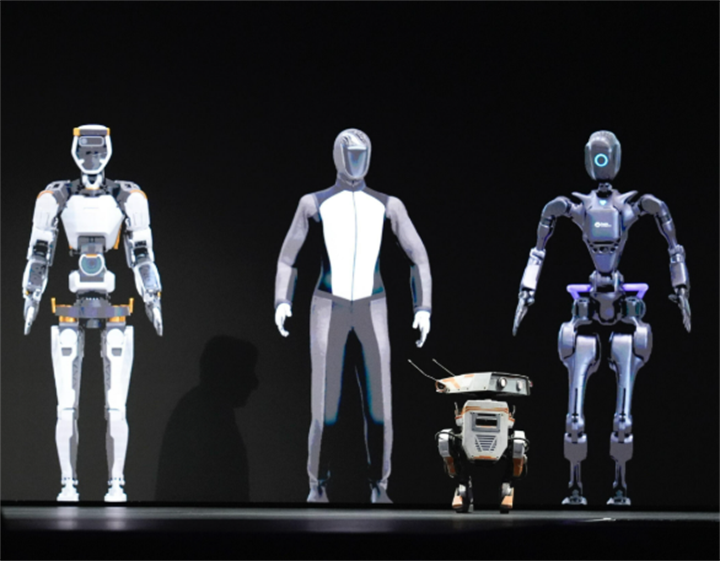
5. Early Institutional Efforts: Giving Robots a Traceable Identity
As the industry expands, early regulatory and standardization efforts are beginning to emerge.
According to a May 22, 2026 report from the People’s Posts and Telecommunications News, the Hubei Humanoid Robot Innovation Center launched a “digital ID” registration system for humanoid robots.
Each robot receives a unique lifecycle identity identifier.
The system is designed to record both:
· Static information such as manufacturer details and hardware specifications
· Dynamic operational data such as joint wear, battery condition, and maintenance history
The broader significance lies in accountability and transparency.
If accidents or malfunctions occur, detailed records could help determine responsibility between manufacturers and users.
A unified identity framework may also support cross-vendor maintenance and data-sharing systems in the future.
Of course, registration alone is only a first step. Long-term enforcement and data verification remain unresolved issues.
6. A Cautious Outlook: Between Bubble Fears and Long-Term Potential
Simply dismissing the humanoid robot industry as a speculative bubble would ignore genuine technological progress and serious industrial investment.
At the same time, treating viral demos and shipment numbers as proof of industrial maturity would also go too far.
A more balanced interpretation may be that humanoid robotics remains in an early and highly uncertain growth phase.
In reports published between 2025 and 2026, Morgan Stanley outlined a long-term scenario in which the global installed base of humanoid robots could eventually reach 1 billion units by 2050, with annual market value approaching 7.5 trillion USD.
However, these figures are scenario exercises rather than predictions or guarantees.
Whether such outcomes become reality will depend heavily on future breakthroughs in:
· Generalization
· Safety
· Cost reduction
· Real-world reliability
It will also depend on whether genuine customer demand develops alongside the technology.
Some analysts compare humanoid robots to the early electric vehicle industry.
But robotics faces different technical challenges involving perception, decision-making, and complex physical interaction with the real world.
Whether the development path will follow a similar trajectory remains uncertain.
For observers, perhaps the most valuable approach is not asking whether the grand narrative is entirely right or wrong.
Instead, more practical questions matter:
· Under what conditions can the robot reliably perform useful tasks?
· With what success rate?
· At what cost?
· How safely can it operate outside controlled environments?
Only when those answers become concrete and independently verifiable will the true commercial value of humanoid robots become clearer.
About the Author
Olivia Bennett specializes in emerging technologies, including artificial intelligence, robotics, space technology, and biotechnology. Drawing on industry research and public data, she explores the technological, commercial, and societal implications of major innovations, with an emphasis on balanced and accessible analysis.
Disclaimer:
The industry data and opinions discussed in this article are based on publicly available reports, news coverage, and public statements from industry professionals. This content does not constitute investment advice or a basis for business decisions. The author holds no financial interest in any company or institution mentioned above.
Recommend:
Autonomous Driving Chips’ Next Chapter: No Longer Just About TOPS, Now It’s About Efficiency
China's Race for the First Publicly Listed Humanoid Robot Company: Which Robots Will Reach Factories and Homes First?
Huawei’s “Tao Law” Could Reshape How Future Chips Are Designed

Space Manufacturing and On-Orbit Servicing: The Next Strategic High Ground of the Space Economy